
A tax reform and cashback They represent the most profound change in consumption tax collection in modern Brazil. This transformation seeks to mitigate fiscal regressivity directly, returning taxes to vulnerable citizens.
Announcements
In 2027, the Brazilian tax system will enter a decisive turning point with the full collection of the Contribution on Goods and Services (CBS) and the payment of tax refunds.
The measure guarantees a direct financial return on the taxes paid on essential items such as electricity, cooking gas, and telecommunications bills.
Below, we detail how the measure works, the exact criteria for receiving the reimbursement, the approved regulations, and the benefit schedule.
Summary
- What is tax refund in the tax reform?
- Who will be entitled to the benefit starting in 2027?
- Which products and services generate tax refunds?
- How will the refund percentage calculation work?
- How will registration and payment be handled?
- What is the transition schedule for the benefit from 2026 to 2033?
- Frequently Asked Questions (FAQ)
What is tax refund in the tax reform?
A tax reform and cashback They introduced into the national legal system a mechanism of social justice based on direct tax reductions on consumption.
The refund returns portions collected through the new value-added taxes: the federal Contribution on Goods and Services (CBS) and the state and municipal Tax on Goods and Services (IBS).
Unlike the broad rebates granted in past tax reviews, this solution personalizes the financial relief.
Tax collection is maintained throughout the production and commercial chain, but the State refunds the taxes promptly to the final recipient categorized as vulnerable.
The gradual replacement of PIS, Cofins, ICMS, and ISS with unified taxes eliminates historical distortions in the Brazilian model.
With digital purchase tracking, the government seeks to reduce the average burden paid by lower-income families without creating an imbalance in public revenue.
Who will be entitled to the benefit starting in 2027?
Families must be actively registered in the Unified Registry for Social Programs of the Federal Government (CadÚnico).
Monthly per capita family income must be up to half the minimum wage. This limit ensures that the program reaches the lowest income segments of the population, also covering all beneficiaries linked to the Bolsa Família program.
The registration requirement includes keeping the Social Identification Number (NIS) updated along with a valid CPF (Brazilian Individual Taxpayer Registry) number registered with the Federal Revenue Service.
The head of the family group registered in the CadÚnico (Single Registry for Social Programs) will receive the accumulated amount for all members registered in the same household.
++ Invisible digital microcost: why your money disappears in apps
Which products and services generate tax refunds?
The legislation prioritized recurring and essential expenses for vulnerable populations to ensure social effectiveness.
Essential services, such as electricity, water supply, sanitation, cooking gas, and telecommunications services, form the core of the expanded reimbursement.
The consumption of general retail goods falls under the standard rule for calculating proportional reimbursement.
Products with a zero tax rate, such as items included in the National Basic Food Basket, do not accumulate cashback balance.
Since these items leave the factory without the application of CBS and IBS taxes, there is no tax amount to be refunded to the buyer. Goods subject to the Selective Tax are also completely excluded.
++ The role of food in household financial planning.
How will the refund percentage calculation work?
The amount reimbursed within the system of tax reform and cashback It varies according to the category of expense incurred and the tax levied. The legislation separated the refunds into two distinct percentage ranges.
For the consumption of essential services — electricity, liquefied petroleum gas, water, sewage, and telecommunications — the refund reaches 100% of the federal CBS and at least 20% of the subnational IBS.
For other everyday purchases of products and services, the standard refund is 20% for CBS and 20% for IBS.
| Consumer Category | CBS (Federal) Refund | Minimum IBS (State/Municipal) Refund |
| Electricity Bill | 100% | 20% |
| Cooking Gas (LPG) | 100% | 20% |
| Sanitation and Telecommunications | 100% | 20% |
| Other Goods and Services Subject to Tax | 20% | 20% |
| Items in the National Basic Food Basket (Zero Tax Rate) | 0% (No incidence) | 0% (No incidence) |
The calculation applies strictly to the portion of tax collected on the sales receipt, and not to the total gross value of the purchase made by the consumer. States and municipalities have legal authorization to increase the portion of the IBS (Brazilian VAT) returned through local laws.
You can follow official publications regarding tax rules by accessing the portal of Brazilian Federal Revenue Service.
How will registration and payment be handled?
Access to the program tax reform and cashback It will not require vulnerable citizens to fill out parallel or bureaucratic registration forms. The validation process is entirely automated and digital.
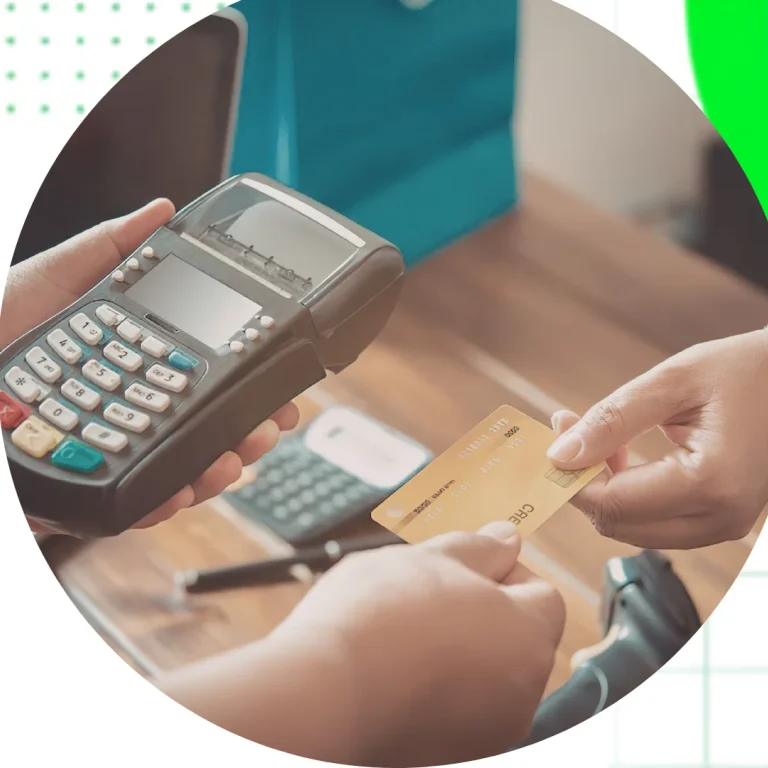
At the time of purchase, the consumer must request that their CPF number be included on the issued tax document.
The IBS Management Committee and the Federal Revenue Service will automatically cross-reference invoices with the CadÚnico database.
The accumulated amounts will be paid directly into the bank account of the family head. The credit will be deposited via PIX linked to the CPF (Brazilian tax identification number) or through digital savings accounts, such as the Caixa Tem app.
For utility bills such as electricity and piped gas, the amount can be deducted directly from the subsequent bill.
++ Split payment: how the new system is changing Brazilian commerce
What is the transition schedule for the benefit from 2026 to 2033?
The complete implementation of the ecosystem of tax reform and cashback The plan follows a phased approach to ensure the stability of the tax collection system. The transition was designed to adapt businesses and the tax authorities.
The year 2026 serves as a pilot and institutional period for technical testing. Symbolic rates of 0.9% for CBS and 0.1% for IBS are charged only for software adjustments, verification of invoice issuance, and checking of CadÚnico data.
- 2026: Testing phase with reduced rates (CBS at 0.9% and IBS at 0.1%) without full operational refund.
- 2027: The start of the effective return of the federal CBS tax, coinciding with the complete elimination of PIS and Cofins.
- 2029: The IBS cashback program will begin gradually, following the progressive replacement of ICMS and ISS taxes.
- 2033: The definitive tax model comes into effect in Brazil, allowing cashback to operate at its maximum capacity.
Conclusion
The ecosystem of tax reform and cashback It reforms the treatment given to consumption by the lower-income population in Brazil.
The program transforms tax collection by returning funds collected on essential bills and everyday purchases directly to the coffers of eligible families.
The key to guaranteeing the right to the benefit starting in 2027 lies in keeping the data in the CadÚnico (Single Registry for Social Programs) up-to-date. Similarly, the population needs to make it a habit to request that their CPF (Brazilian taxpayer ID) be included on all issued receipts and invoices.
For further details on social entitlements and income program guidelines, please consult the institutional portal of Ministry of Development and Social Assistance, Family and Fight against Hunger.
FAQ (Frequently Asked Questions) section
Will those earning minimum wage be entitled to cashback?
Only if the monthly income per person in the family is up to half the minimum wage. If a person lives alone and earns the minimum wage, they do not meet the required individual criterion.
Will the cashback be calculated on the total value of the invoice?
No. The refund applies exclusively to the amount corresponding to the taxes (CBS and IBS) shown on the invoice, and not to the total price paid for the product or service.
I forgot to ask for my CPF (Brazilian tax ID) on the receipt. Can I redeem the cashback later?
It's not possible. Including the CPF (Brazilian taxpayer ID) at the exact moment the sales receipt is issued is an indispensable technical requirement for cross-referencing data between the tax authorities and the CadÚnico (Brazilian social welfare registry).
Does receiving Bolsa Família automatically qualify for cashback?
Yes. Beneficiaries of the Bolsa Família program already meet the income requirements and have an active registration in the CadÚnico (Single Registry for Social Programs). They only need to request their CPF (Brazilian taxpayer ID) on the invoice.