
Knowing how avoid unaccredited courses This is the first step in protecting your time, investment, and professional future in a saturated education market.
Announcements
The supply of qualifications is growing at an accelerated pace, but this progress brings a silent trap: training programs sold with an academic veneer but without legal backing in Brazil.
Below, we have organized the essential points of this verification so that you can navigate each step with technical confidence and critical discernment.
Table of Contents
- How can I tell if a course is recognized by the MEC (Brazilian Ministry of Education)?
- What are the real risks of studying at an unregulated institution?
- What is the difference between a free course, an authorized course, and a recognized course?
- Comparative table of institutional status in Brazil
- Who oversees the provision of education in the national territory?
- Conclusion
- Frequently Asked Questions (FAQ)
How can I tell if a course is recognized by the MEC (Brazilian Ministry of Education)?
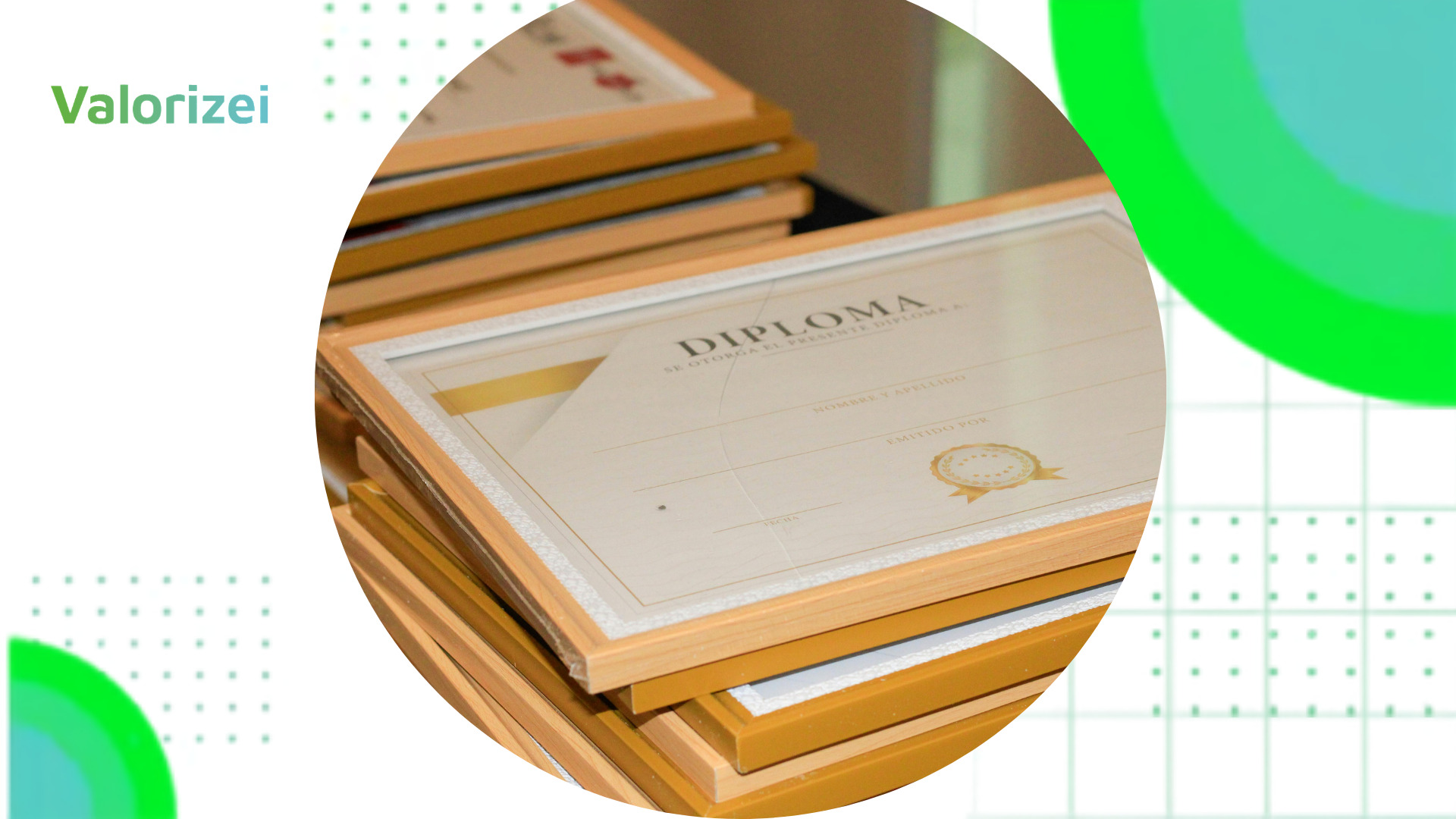
To avoid unaccredited courses, Direct consultation, without intermediaries, of the Ministry of Education's official registry remains the most effective protective barrier.
This verification takes place on the e-MEC platform, where you can search for the institution by name or CNPJ (Brazilian tax ID) to examine the actual status of its accreditation.
Check if the chosen modality — whether in-person or distance learning — has active authorization and valid ratings assigned by the regulatory body's evaluators.
It's curious to note how some schools adopt names identical to those of large universities, a tactic that confuses the inattentive student at the time of enrollment.
Request the accreditation certificate and verify the detailed information directly on the official website. Ministry of Education (MEC) before signing the contract.
How can I tell if a course is recognized by the MEC (Brazilian Ministry of Education)?
To avoid academic fraud, direct and free access to the official registry of the Ministry of Education is the safest way for students.
The verification must be done through the e-MEC platform, where you enter the institution's name or CNPJ to check its accreditation status.
Make sure the chosen program has active authorization and valid grades before enrolling or signing any contract.
What are the real risks of studying at an unregulated institution?
Spending years on education without legal backing jeopardizes the issuance of a diploma and immediately blocks access to positions in public service exams.
Professional bodies, such as CREA, OAB, and COFEN, simply refuse to register graduates, making it impossible to legally practice the career you planned to pursue.
There is a silent loss in the time wasted, since courses completed at non-accredited colleges are often rejected when trying to transfer credits to other institutions.
Human resources departments also analyze the origin of the degree, discarding professionals trained by organizations situated in the shadows of pedagogical legality.
++ How to choose a course that will truly increase your job opportunities.
What is the difference between a free course, an authorized course, and a recognized course?
Open courses do not require government approval to operate, focusing on practical skills and specific updates, but they do not confer a higher education degree to students.
Authorization is merely the initial license to open classes, while actual recognition occurs when the first class reaches half of its required hours.
Check if the desired undergraduate or graduate program has already received final approval, avoiding unpleasant surprises when the time comes to defend your thesis.
This confusion between the terms leads many to pay for a university degree and receive a certificate that has no value in the formal job market.
Adopt clear criteria for avoid unaccredited courses It protects your rights and ensures that the chosen institution delivers what it promises in its advertising.
++ Discover the 10 most sought-after in-person courses in 2020.
| Institutional Status | Legal Requirement | Does it issue a Bachelor's Degree? | Valid nationwide |
| Free Course | Exempt from regulation | No (certificate only) | Limited to technical knowledge |
| Authorized | Initial decree from the Ministry of Education | In the validation process. | Subject to final approval. |
| Recognized | Periodic evaluation by the Ministry of Education | Yes, with full legal validity. | Valid throughout Brazil |
Who oversees the provision of education in the national territory?
The Secretariat for Regulation and Supervision of Higher Education oversees inspections at private and public colleges to verify the maintenance of operational conditions.
The National Institute for Educational Studies and Research Anísio Teixeira evaluates faculty, laboratories, and pedagogical projects through the Enade exam and on-site audits.
Consumer protection agencies, such as Procon, intervene when they identify misleading advertisements that sell diplomas without legal value as if they were degrees.
Students who notice irregularities should file a formal complaint through government channels, an action that helps to stop the operation of clandestine establishments.
Knowing where to report and how avoid unaccredited courses It preserves the credibility of education and protects society against recurring educational fraud.
How can you check the reputation of an educational institution beyond the MEC (Brazilian Ministry of Education) ratings?

In addition to formal verification within the government system, investigating the institution's history in practice avoids unpleasant surprises regarding the quality of classes and service.
Consult platforms like Reclame Aqui to assess the volume and resolution of student complaints regarding delays in diploma delivery or misleading promises.
Also, talk to current and former students on professional networks like LinkedIn to understand the market's real perception of the course offered.
++ How to know if a course is recognized by the MEC (Brazilian Ministry of Education)
Conclusion
Choosing a course of study requires an investigative approach, a healthy dose of skepticism towards absurdly low prices, and continuous checking of the curriculum guidelines established for each profession.
Advertisements promising university degrees in ridiculously short timeframes often conceal serious accreditation flaws that render the document unusable in future professional endeavors.
Check all the necessary authorizations before paying any fees, ensuring that your diploma has the proper value in the job market.
Stay up-to-date with industry regulations and consult education system data at [website/link]. Gov.br Portal whenever you plan a new academic step.
Frequently Asked Questions (FAQ)
How can I confirm if an online course has valid authorization?
Access the e-MEC portal, search for the institution, and select the distance learning tab to check the active learning centers and current grades.
What should I do if I find out that my course is not recognized?
Contact the institution's administration to demand clarification, contact the consumer protection agency (Procon), and request an immediate transfer to a properly accredited college.
Can a short course be converted into a degree in the future?
No, non-degree courses have a distinct legal nature and cannot be automatically converted into undergraduate degrees without a selection process and official regulation.