
The AI-powered financial fraud They have completely redefined global banking security, requiring financial institutions to reshape their preventative strategies to contain new cyberattacks.
Announcements
The exponential growth in the use of advanced algorithms by criminals has transformed traditional social engineering into extremely hyper-personalized and efficient automated attacks against customers.
In this comprehensive article, you will understand exactly how banks are modernizing their technological defenses to shield transactions and protect accounts against next-generation threats.
Summary
- How do new AI-powered financial scams work in practice?
- What are the main technologies adopted by banks for protection?
- Where is defensive artificial intelligence already being applied in the financial sector?
- How do real-world data demonstrate the impact of cyber scams?
- Who is legally responsible and how do regulations protect consumers?
- Conclusion
- Frequently Asked Questions (FAQ)
How do new AI-powered financial scams work in practice?
Criminals use sophisticated voice synthesis and deepfake tools to clone the biomic identity of customers and simulate legitimate financial authorizations in calls.
Precise voice cloning allows fraudsters to bypass traditional telephone verification systems, easily deceiving family members and managers with false requests for urgent transfers.
Furthermore, phishing messages developed using generative models eliminate common grammatical errors, creating highly convincing approaches that capture banking credentials and sensitive data without raising suspicion.
Automated intrusions employ brute-force attacks managed by advanced algorithms to test thousands of passwords per second without triggering immediate blocks on digital channels.
Finally, the hijacking of active sessions in the application occurs through malware trained to bypass simple behavioral detections on unprotected mobile devices of account holders.
The constant evolution of these tactics demonstrates why combating them is so important. AI-powered financial fraud It requires daily updates and fully automated defensive responses in the banking ecosystem.
What are the main technologies adopted by banks for protection?
Behavioral biometrics continuously analyzes typing speed, screen touch pressure, and habitual user movements to validate their true identity.
Advanced liveness detection systems require real-time body checks, preventing still photos, recorded videos, or digital masks from bypassing the app's facial validation.
Dedicated neural networks monitor trillions of simultaneous transactions, identifying minute deviations in customer spending patterns even before the transfer is successfully completed.
The implementation of dynamic tokenization ensures that credit card data varies with each transaction, completely preventing cybercriminals from reusing intercepted information.
Adaptive machine learning algorithms continuously learn from new attempted scams, updating the central system's blocking rules without the need for human intervention.
Where is defensive artificial intelligence already being applied in the financial sector?
When opening digital accounts, smart platforms instantly check the authenticity of submitted documents, cross-referencing public databases to prevent the use of synthetic identities created by criminals.
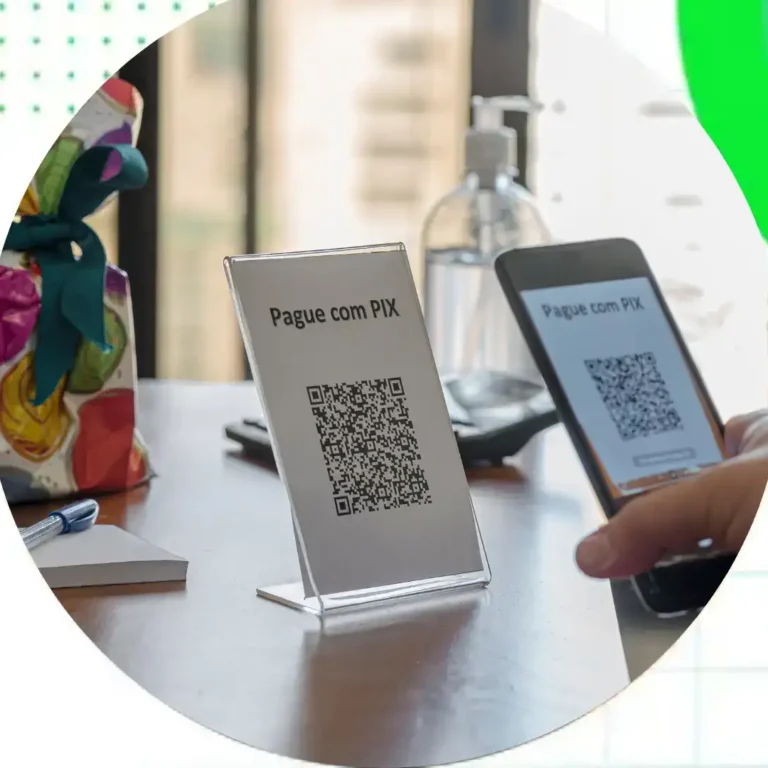
In the processing of Pix and instant transfers, analytical engines hold suspicious payments for strategic minutes to allow for in-depth analysis of the destination account and recipient history.
In call centers, systems analyze the sound frequency of the voice to identify artificial syntheses before the operator provides any confidential information about the account holder.
The proactive checking of suspicious links integrated into banking apps alerts customers in real time about attempted scams via SMS messages or fraudulent emails.
Financial governance platforms used by large banks utilize global cybersecurity guidelines. Federal Reserve Financial Services to standardize the mitigation of operational risks.
Thus, the containment of AI-powered financial fraud It occurs at all points of the service, covering everything from mobile access to processing on central servers.
What practical precautions should customers take to avoid scams?
Enabling two-factor authentication on all banking apps and social media drastically reduces the chances of unauthorized access by criminals.
Avoiding clicking on links received via text messages or chat applications prevents the hidden installation of malicious software on mobile devices.
Being wary of urgent requests for money sent by family members or acquaintances through recorded audio messages can help prevent falling victim to voice cloning scams.
Always check the recipient's name and the destination institution before confirming any transfer via Pix to ensure that the funds reach the correct location.
+ Ad-supported streaming: families are switching to cheaper plans.
How do real-world data demonstrate the impact of cyber scams?
Reports from the financial sector reveal that cyber automation has significantly increased the volume of attempted intrusions, requiring billions of dollars in investments in IT infrastructure and analytical intelligence.
Global research indicates that the use of behavioral biometrics has reduced operational losses in institutions that have adopted continuous verification in their payment ecosystems and native applications.
+ Actions related to tourism and consumption: opportunities during the 2026 World Cup
| Type of AI Fraud | Attack Mechanism Used | Mitigation Banking Technology |
| Voice Deepfake | Audio cloning for social engineering | Frequency analysis and active vocal biometrics |
| Generative Phishing | Emails and messages without spelling errors. | Behavioral filters and contextual URL analysis |
| Synthetic Identity | Combining real and fake data to open accounts. | Liveness detection and cross-validation of documentation |
| Brute Force Attacks | Password testing managed by advanced bots. | IP monitoring, MFA verification, and rate limiting. |
Who is legally responsible and how do regulations protect consumers?
National legislation establishes the strict liability of financial institutions for failures in internal security that allow fraudulent transactions to be carried out by unauthorized third parties.
The Consumer Protection Code stipulates that the bank must prove the account holder's sole fault to be exempt from the obligation to reimburse amounts stolen through fraud.
Central Bank resolutions require entities to implement rigorous mechanisms for tracking atypical transactions and to share information about Pix keys linked to criminal activities.
Courts have consolidated the understanding that leaks of registration data that enable ingenious approaches by scammers generate a clear duty to compensate for material and moral damages.
Transparency rules imposed by regulatory bodies require companies to immediately notify account holders of any relevant security incident detected in their systems.
With this rigorous regulatory coverage, addressing the AI-powered financial fraud It gains solid legal backing, ensuring fundamental rights for users of digital banking services.
+ MED for Pix: new rules increase the recovery of funds.
Conclusion
The rapid advancement of social engineering technologies demands a proactive stance and constant vigilance from all actors involved in the digital payments and transfer ecosystem.
While banks invest record sums in defensive intelligence and behavioral monitoring, customers need to be extra vigilant about sharing personal data and passwords.
The combination of highly sophisticated banking systems, clear regulations, and ongoing digital education is the only sure way to contain the spread of modern cybercrime.
To deepen your knowledge of global guidelines and international standards for the protection of users and critical infrastructure, access the portal of Bank for International Settlements.
Frequently Asked Questions (FAQ)
Will the bank reimburse me if I fall victim to AI-generated financial fraud?
Yes, if it is proven that the banking system failed by allowing atypical transactions outside of your profile, the institution must reimburse the lost amounts in accordance with the law.
How can I tell if a call featuring my manager's voice was created by artificial intelligence?
Be immediately suspicious of urgent transfer requests, hang up the call, and contact your bank directly through the official channels registered in your app.
Is the use of facial biometrics in banking apps completely secure against spoofing?
Modern technologies utilize real-time liveness detection tests, requiring specific movements to ensure that the user present is a real, physical person.
What is the most effective way to avoid automated social engineering scams?
Always enable two-factor authentication, never provide passwords over the phone or via text message, and be wary of links that lead to emergency registration update pages.
Does the Central Bank have tools to block Pix payments sent to fraudulent accounts?
Yes, the Special Refund Mechanism (MED) allows for the precautionary blocking and tracking of financial resources when fraud is reported promptly by the affected customer.