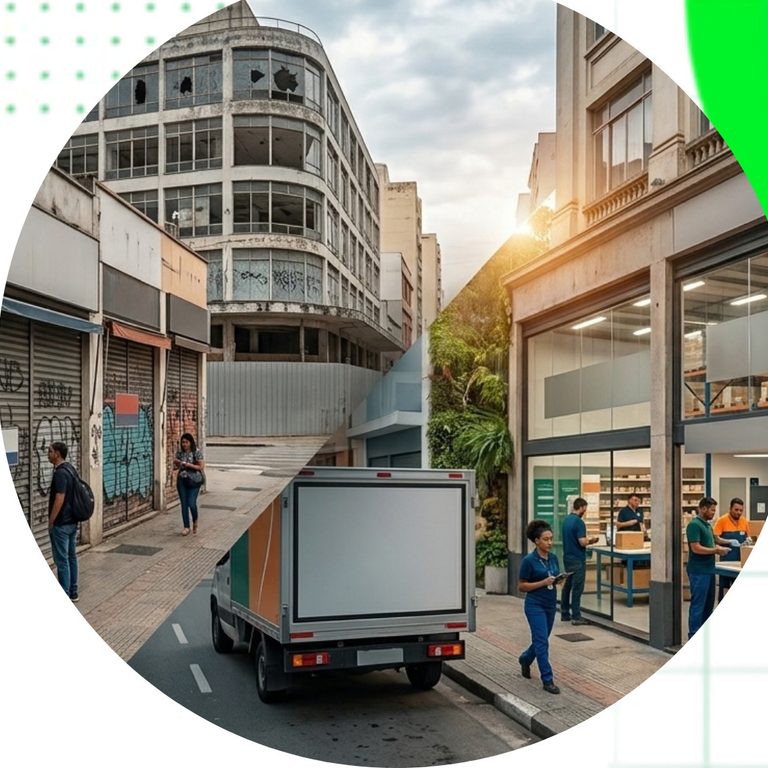

A low-carbon economy is reshaping the future of global development, promoting an economic model that reduces greenhouse gas (GHG) emissions without compromising growth.
Announcements
Unlike traditional industrial paradigms, which prioritize productivity at any environmental cost, this model seeks to harmonize economic prosperity, sustainability, and innovation.
But what exactly defines this economy, and how can it be an engine for job creation?
This text explores the concept, its impacts on the labor market, and the opportunities that arise from this transition, with solid arguments, concrete examples, and a strategic approach for the future.
What is the low-carbon economy?

The low-carbon economy is a production system that minimizes GHG emissions, such as carbon dioxide (CO₂), methane, and nitrous oxide, while maintaining or increasing economic efficiency.
This model encompasses sectors such as energy, transportation, agriculture, and industry, integrating clean technologies, sustainable practices, and public policies that encourage decarbonization.
For example, replacing fossil fuels with renewable sources such as solar and wind is a central pillar of this approach.
However, the low-carbon economy goes beyond energy: it involves everything from redesigning supply chains to changing consumption habits.
To illustrate, imagine a city that functions like a living organism.
Just as a human body needs balance to thrive, the low-carbon economy seeks a sustainable metabolism, where resources are used efficiently and waste, such as emissions, are minimized.
This analogy highlights the interconnectedness of economic and environmental systems, where each sector contributes to a healthier whole.
In this context, technological innovation plays a crucial role, but it also requires cultural adaptation and robust public policies.
Interestingly, the low-carbon economy is not just a response to the climate crisis, but an opportunity to reset global priorities.
Why continue to rely on finite resources when we can build systems that regenerate and thrive over the long term?
Transitioning to this model requires investments in research, infrastructure, and education, but the benefits, such as job creation and reduced costs from climate disasters, outweigh the initial challenges.
See also our article on: How rising fuel prices impact food prices
How does the low-carbon economy create jobs?

The transition to a low-carbon economy is a catalyst for job creation, especially in emerging sectors such as renewable energy, sustainable construction, and electric mobility.
According to the International Labour Organization (ILO), the adoption of sustainable practices can generate up to 24 million jobs globally by 2030, with emphasis on occupations in energy efficiency, recycling and clean technologies.
++ Strategies for B2B Businesses on a Limited Budget
This impact is driven by the demand for new skills and the restructuring of traditional industries, which need to adapt to decarbonization goals.
A practical example is the wind energy sector in Brazil.
By 2024, the country will be one of the global leaders in wind energy, with wind farms in the Northeast creating thousands of direct and indirect jobs.
From turbine manufacturing to park maintenance, skilled workers such as engineers and technicians find opportunities in a production chain that did not exist two decades ago.
Furthermore, local communities benefit from jobs in logistics and services, highlighting how the low-carbon economy can boost less-favored regions.
Furthermore, another case is the electric vehicle (EV) industry.
In São Paulo, a fictitious startup called EcoMobil develops more efficient lithium batteries, employing chemists, software engineers and specialized workers.
In short, this company not only reduces the carbon footprint of transportation, but also creates jobs in battery research, manufacturing, and recycling.
Unlike traditional industries, which often concentrate wealth, the low-carbon economy distributes opportunities by requiring collaboration across sectors and specializations.
Table: Sectors of the low-carbon economy and their impacts on employment
| Sector | Examples of occupations | Impact on employment |
|---|---|---|
| Renewable Energy | Wind engineers, solar panel installers | High demand for technicians and researchers |
| Sustainable Construction | Architects, experts in energy efficiency | Growth in retrofit projects and new construction projects |
| Electric Mobility | Battery developers, specialized mechanics | New production chains and services |
| Regenerative Agriculture | Agronomists, experts in carbon capture | Expansion in sustainable agricultural practices |
Challenges and opportunities in the transition

While the low-carbon economy holds promise, its implementation faces significant obstacles.
++ How to Create Savings Goals That Actually Work
Resistance from traditional industries, such as oil, and the lack of infrastructure in some countries hinder the adoption of clean technologies.
Furthermore, reskilling the workforce is a challenge, especially in regions dependent on carbon-intensive sectors.
However, these challenges open doors to innovations, such as training programs and tax incentives that accelerate the transition.
On the other hand, the opportunities are vast.
The low-carbon economy encourages entrepreneurship, with startups developing solutions such as biodegradable materials or carbon capture systems.
Countries like Denmark, which has invested heavily in wind energy, demonstrate that public policies aligned with economic incentives can transform challenges into competitive advantages.
International collaboration is also essential, as the exchange of technologies and best practices can accelerate the global transition.
Therefore, it is worth highlighting that the low-carbon economy is not just a technical issue, but also a social one.
The inclusion of marginalized communities, such as smallholder farmers or workers in declining industries, is critical to ensuring a just transition.
Training programs, such as those offered by EcoMobil In our example, they can retrain coal-fired power plant workers to work in battery production, promoting social and economic justice.
The role of public policies and the private sector

Public policies are the foundation of the low-carbon economy, providing the necessary framework for systemic change.
Tax incentives, emissions regulations, and investments in green infrastructure are examples of how governments can lead this transformation.
In Brazil, for example, the program Light for All has been adapted to include solar power in remote communities, creating local jobs and reducing dependence on fossil fuels.
The private sector, in turn, is a driver of innovation.
Companies that adopt sustainable practices not only reduce costs in the long run, but also attract conscious consumers.
A hypothetical case is the VerdeTech, a Brazilian company that develops affordable solar tiles.
By integrating photovoltaic panels into building materials, it creates jobs in design, production, and installation, while reducing the real estate sector's carbon footprint.
This synergy between profit and sustainability is at the heart of the low-carbon economy.
Furthermore, collaboration between governments and businesses is essential.
Public-private partnerships can finance large-scale projects such as electric transportation networks or solar farms.
These initiatives not only create jobs, but also position countries as leaders in emerging global markets.
Thus, attracting foreign investment and promoting sustainable economic growth.
Table: Examples of public policies and private initiatives
Announcements
| Initiative | Description | Impact |
|---|---|---|
| Tax incentives | Tax reduction for renewable energy companies | Stimulating innovation and job creation |
| Requalification programs | Training for workers in traditional sectors | Just transition to the green economy |
| Public-private partnerships | Financing infrastructure such as charging networks | Market expansion and job creation |
Frequently asked questions about the low-carbon economy
| Question | Response |
|---|---|
| What makes a low-carbon economy different? | It prioritizes reducing GHG emissions while maintaining economic growth, integrating clean technologies and sustainable practices. |
| Does the low-carbon economy eliminate jobs? | No, it transforms the market, creating new opportunities in sectors such as renewable energy and sustainable construction, although it requires retraining. |
| Which sectors are most impacted? | Energy, transportation, agriculture, and construction are the main ones, but all sectors can benefit from sustainable practices. |
| How can small businesses participate? | Through innovations such as sustainable products, energy efficiency and partnerships with government programs. |
| Is it economically viable? | Yes, in the long run, it reduces costs related to climate disasters and increases competitiveness in global markets. |
The future of the low-carbon economy
The future of the low-carbon economy depends on an integrated approach that combines technology, public policies, and social engagement.
Artificial intelligence, for example, can optimize energy systems, predict demand, and reduce waste, while education creates a new generation of qualified professionals.
In this sense, the low-carbon economy is not a final destination, but a continuous process of adaptation and innovation.
Furthermore, the pressure for sustainability is changing consumer behavior.
Companies that ignore this trend risk obsolescence, while those that adapt thrive.
A VerdeTech, for example, shows how innovation can meet market demands and, at the same time, generate a positive impact.
This dynamism is what makes the low-carbon economy so promising.
Ultimately, the transition to this model is an opportunity to redefine progress.
Instead of measuring success solely by GDP, we can value resilience, inclusion, and sustainability.
The low-carbon economy is not just a response to climate change, but an invitation to build a future where prosperity and environmental balance go hand in hand.
What role will you, your company, or your community choose in this new scenario?