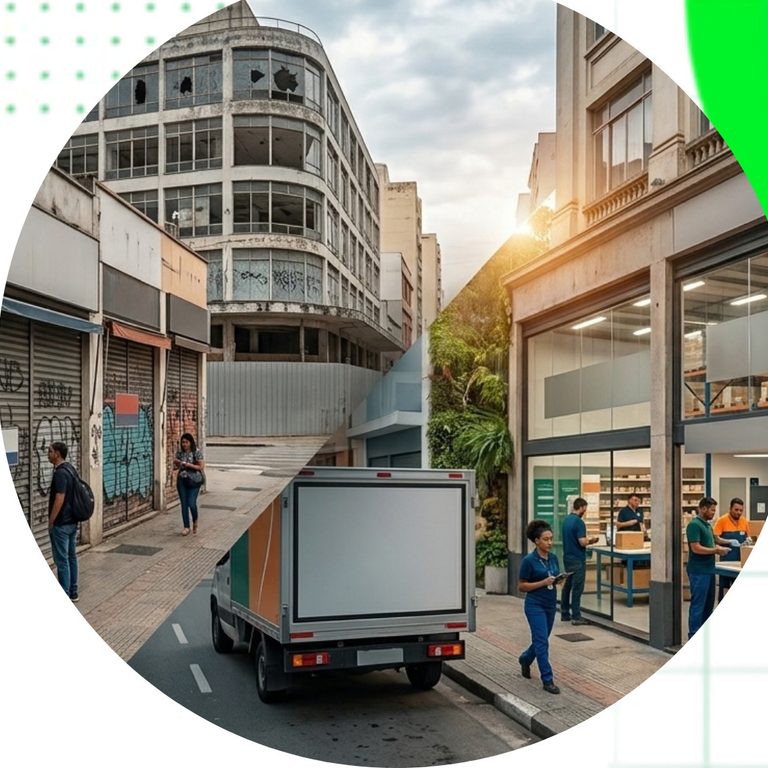


A Brazil's regional economy In 2026, it's no longer a future project; it's a reality that overwhelms the...
Announcements
More conservative forecasts. While traditional capitals struggle with infrastructural clutter and prohibitive costs, the country's interior has ceased to be merely the "breadbasket" and has become the engine of unprecedented productive sophistication.
This shift in focus is not happening by chance. We are witnessing a geographical reorganization of wealth, where medium-sized cities offer what metropolises have lost: operational agility and a rare symbiosis between technological development and quality of life.
The map of Brazilian prosperity is being redrawn, and the coordinates now point towards the interior.
Summary
- The new landscape of Brazil's regional economy.
- The saturation of metropolitan areas and the rise of the countryside.
- Agribusiness 4.0: When the field becomes a laboratory
- The invisible sectors that support growth.
- Logistics as the major Achilles' heel
- Reflections on the economic outlook
What defines the new dynamics of the Brazilian regional economy?
Observe the Brazil's regional economy Today, it's necessary to abandon old mental maps that placed the coast as the sole center of decision-making. What we see in 2026 is a productive maturity that aggressively and efficiently decentralizes wealth.
Cities that were once mere transit points now retain capital, creating ecosystems where money circulates and multiplies locally.
This transformation was accelerated by a digitalization that ignored geographical boundaries. When an agritech startup in Mato Grosso manages to raise funds in Frankfurt without going through Faria Lima, the traditional urban hierarchy crumbles.
The focus shifted to intermediate centers — those with 100,000 to 500,000 inhabitants — which learned to use technology to eliminate distances.
There's something fascinating about how the interior of Northeast Brazil and the Midwest are dictating the pace of GDP growth. It's not just about exporting raw commodities; it's about a regional intelligence that has learned to vertically integrate production and attract talent fleeing the chaos of the capital cities.
Why are medium-sized cities leading the current growth?
The decline of metropolises as unique centers of opportunity is a phenomenon of exhaustion. Astronomical rents and paralyzing traffic have become invisible taxes that businesses are no longer willing to pay.
In contrast, medium-sized cities emerge as a pragmatic alternative, offering real tax incentives and a higher education network that trains a skilled workforce right on their doorstep.
There's a common misconception that the interior of the country lacks sophistication. In practice, cities like Cascavel, Caruaru, or Uberlândia now have innovation centers that leave many upscale neighborhoods in larger metropolitan areas behind.
The reduced cost of living attracts the intellectual middle class, which, in turn, forces local businesses to raise their standards — from gourmet coffee shops to cutting-edge legal consulting services.
Public administration in these centers also seems to have understood the game. Less bureaucracy and more data-driven governance have transformed these municipalities into partners of the private sector.
The result is a virtuous cycle: more companies, more tax revenue, better infrastructure and, inevitably, more growth.
How does agribusiness 4.0 drive the regional economy of Brazil?
Talking about Brazil's regional economy To ignore the technology in this field is to fail to engage with it, and to ignore the country's greatest driving force in 2026.
The image of the isolated rural producer has been replaced by control rooms that operate fleets of autonomous tractors via 5G.
Agribusiness is now a high-precision industry where every inch of soil is monitored by artificial intelligence to maximize yield.
This dynamism spills over onto the asphalt. Cities like Sinop and Rio Verde are not just support centers; they have become hubs for luxury consumption and centers for specialized services.
The social impact is visible: where agriculture advances with technology, human development indices tend to rise consistently, challenging the notion that rural areas are places of backwardness.
The integration of agriculture, livestock, and forestry (ILPF) has brought a layer of sustainability that the international market now demands.
+ Well-being economics: Brazilians prioritize health in 2026
Which sectors generate the most jobs in the interior?
The regionalized job market in 2026 is dominated by high value-added services. We are not just talking about manual labor, but also data engineers, reverse logistics specialists, and sustainability managers.
Medium-sized cities have become the country's new construction sites, with the expansion of logistics parks and industrial plants seeking proximity to raw materials.
The retail sector has also changed. Large national chains no longer consider capital cities as an absolute priority; they know that real purchasing power today lies where agriculture and the manufacturing industry meet.
This creates a ripple effect in the hotel and events sector, which are now teeming with technical conventions and trade shows throughout the year.
Food processing and clean energy production — especially biomass and solar — complete this ecosystem.
It's a self-reinforcing economy, ensuring that the money generated in the interior remains in the interior, financing the next round of urban expansion.
+ Pix key blocked in digital account: how fraud is flagged
Growth Comparison by Region (Projection 2026)
| Region | Estimated GDP Growth | Leading Sector | Main Hub |
| Midwest | 4,2% | Agribusiness and Energy | Rio Verde (GO) |
| North East | 3,8% | Renewable Energy | Juazeiro do Norte (CE) |
| South | 2,9% | Manufacturing and Technology | Joinville (SC) |
| Southeast | 2,1% | Services and Finance | Campinas (SP) |
| North | 3,5% | Sustainable Mining | Parauapebas (PA) |
What are the main logistical challenges?
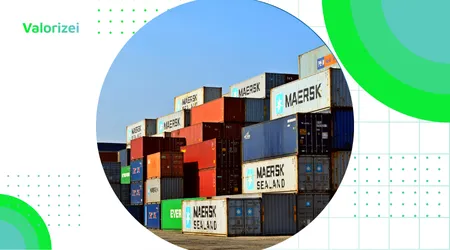
Despite the strength of Brazil's regional economyHowever, the country still faces physical limitations that seem anachronistic.
The cost of road freight continues to be a drain on efficiency, penalizing producers who are far from ports.
Excessive reliance on highways is a strategic vulnerability that 2026 has not yet fully resolved, despite the progress of railway concessions.
The digital infrastructure, although it has advanced with 5G, is still a patchwork. In many productive rural areas, the “blackout"Lack of connectivity prevents Industry 4.0 from reaching its full potential."
Without a stable internet connection, crop monitoring and regionalized telemedicine become inadequate tools, limiting the human development of those outside urban areas.
Basic sanitation and urban mobility also emerge as bottlenecks in these cities that are growing too fast.
Planning often fails to keep pace with migration, creating underserved peripheries in municipalities that, on paper, are worth billions. The challenge now is to transform gross economic growth into balanced social development.
+ Pix via WhatsApp from PicPay: when is it worth using in your digital account?
The horizon of the regionalized economy
The trajectory of medium-sized cities points to a less centralized and, consequently, more resilient Brazil.
The astute investor has already realized that the risk of concentrating capital in saturated metropolitan areas is greater than betting on regional diversification.
The interior is not only growing; it is dictating the new rules of governance and sustainability that the rest of the country will have to follow.
The future demands a close look at municipalities that manage to combine productivity with preservation. Brazil's regional economy It is experiencing its best moment precisely because it has learned to explore its local vocations without waiting for validation from the capital.
Progress is now traveling in the opposite direction of history: it is born in the countryside and conquers the country.
Frequently Asked Questions (FAQ)
What defines a medium-sized city in the current economic landscape?
These are municipalities that, with populations between 100,000 and 500,000 inhabitants, manage to offer metropolitan infrastructure with the agility of a small town, becoming service and education hubs for an entire region.
How does the regional economy of Brazil influence personal investments?
It opens doors to less inflated real estate markets and direct investments in technology and agribusiness companies that have solid fundamentals and less exposure to the crises of major capitals.
Why does the Midwest continue to be the star of growth?
In addition to the strength of its commodities, the region has invested heavily in the industrialization of its production. Instead of selling only grains, it now exports animal protein and biofuels, adding value and retaining wealth.
Is the Northeast really becoming a technological hub?
Without a doubt. Massive investment in wind and solar energy has created a demand for specialized engineering, transforming inland cities into world-renowned centers of sustainable technology.
Does economic decentralization help reduce rural exodus?
More than reducing the exodus, it is creating a "reverse urban exodus." Skilled professionals are leaving the major capitals in search of the opportunities and security that the new regional centers offer.