
The phenomenon of expensive post-credit consumption It will redefine the financial structure of Brazilian families in 2026, requiring rapid adaptations in the face of interest rates that remain at restrictive levels.
Announcements
In this article, we will explore behavioral changes, economic survival strategies, and how household planning has become the primary tool for avoiding systemic over-indebtedness.
Summary
- The current credit landscape in Brazil
- How does the cost of credit affect purchasing power?
- What are the new consumption strategies of families?
- The role of financial education in debt management.
- Economic outlook and market comparison
- Conclusion and Frequently Asked Questions
What does expensive post-credit consumption mean in the current context?
The expression expensive post-credit consumption This defines that awkward moment when the cost of borrowing money simply outweighs the increase in average monthly income.
In 2026, the scenario is one of forced sobriety. Credit cards and overdraft facilities have reached interest rates that have transformed installment payments into an obvious mathematical risk.
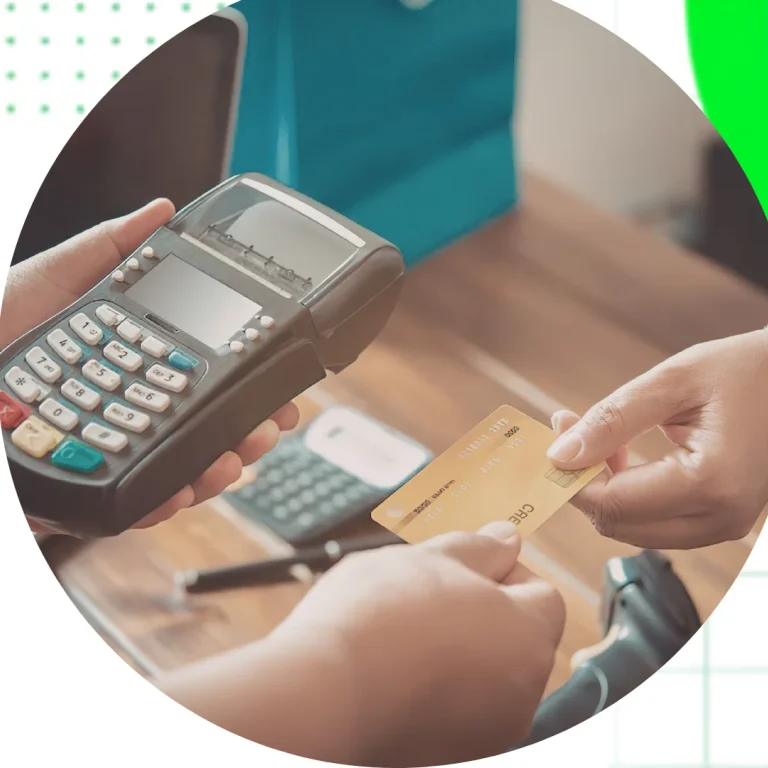
This reality has pushed consumers away from the cultural habit of "paying in installments for ages," prioritizing Pix (Brazil's instant payment system) or cash payments to secure discounts.
The key point here is understanding the Total Effective Cost (TEC). The average Brazilian has stopped looking only at the installment payment and has started to see the final amount.
Access to quick cash has gone from being a "spare change" to a luxury item, used only in cases of extreme financial need.
Experts note that this maturity did not come about by choice, but through a rigid monetary policy that attempts, at all costs, to contain the residual inflation of recent years.
See also: Pix via WhatsApp from PicPay: when is it worth using in your digital account?
How does the high cost of credit impact the household budget?
When the expensive post-credit consumption When the first sign of financial strain knocks on the door, it appears in the compromised income, which disappears even before the month is over.
There is something worrying about the fact that many families today dedicate more than 30% of their income just to pay interest on debts incurred during times of optimism.
This scenario drains resources that would otherwise be allocated to leisure or education, creating a domino effect that ultimately cools down commerce and the service sector.
Retailers, feeling the blow, are desperately trying to attract customers with aggressive prices for those who pay on the spot, avoiding the prohibitive fees charged by payment terminals and banks.
The loss of purchasing power is palpable, hitting the middle class hard, which historically used credit as a means to buy a new car or renovate their home.
Without this cheap leverage, the consumption cycle for durable goods has shrunk, and what we see now is a collective effort to repair rather than replace.
+ Scheduled money: does automating finances help or hinder?
What changes in habits have been adopted by Brazilian families?
Adapting to expensive post-credit consumption This has generated a change in behavior that is unlikely to be reversed, even if interest rates fall in the near future.
Expense spreadsheets and management apps have gone from being tools for "finance enthusiasts" to becoming a matter of survival at the dinner tables of Brazilian families.
There is a noticeable mass migration towards entry-level brands and generic products in supermarkets, a pragmatic move to stretch the value of every real available in one's pocket.
Collaborative consumption has also flourished. Tool rental platforms and the market for pre-owned items have gained a relevance that was previously viewed with some prejudice.
Many Brazilians are now actively seeking out digital debt negotiation initiatives, trying to exchange debts with explosive interest rates for more controlled and predictable long-term credit lines.
For those who wish to monitor how government decisions affect this cost, it is worthwhile to follow the updates from... Selic rate on the Central Bank of Brazil's website., the market thermometer.
Why is financial planning the only sustainable way out?
Manage the expensive post-credit consumption It requires a mental re-engineering: understanding, once and for all, that money has a price that varies over time.
Rigorous planning is what separates families who maintain their standard of living from those who spiral into insolvency within a few months.
Having an emergency fund, however small, has become the greatest symbol of financial status, as it protects individuals against abusive bank loans.
A domestic financial education It has taken on practical dimensions, with parents involving their children in budget management to prevent the next generation from repeating the mistakes of impulsive debt.
Mastering simple concepts of compound interest It allows consumers to anticipate market pitfalls and protect their assets against currency fluctuations and inflation.
Spending ten minutes comparing the administration fees of different cards can, at the end of the year, mean the difference between having money for vacation or not.
Read also: New consumer class: changes in Brazilian consumption in 2026
What are the alternatives to traditional bank loans?
In the face of expensive post-credit consumptionFamilies sought relief in credit unions and fintech companies that, with lean structures, are able to offer somewhat more reasonable rates.
Payroll-deducted loans remain a viable option for those with job security, offering interest rates that don't disrupt the monthly budget of retirees and public employees.
Another strong trend is the return of consortiums and purchasing groups, where the reward for waiting for the draw is the complete escape from extortionate bank interest rates.
Digital wallets with daily returns They have come to be used as a defense strategy, maintaining the necessary liquidity while combating the loss of value of idle money.
The exchange of services between self-employed professionals has also resurfaced strongly, a kind of barter economy that ignores the need for intermediation by traditional banks.
This diversification is what keeps the economy going, allowing families to continue consuming the essentials without becoming hostages to bills that never stop growing.
Comparative Data: The Cost of Credit in 2026
The table below reflects the reality of average market rates, an indispensable map for understanding where the biggest pitfalls for your budget lie.
| Credit Modality | Average Monthly Rate (%) | Impact on the Budget | Usage Recommendation |
| Credit Card (Revolving Credit) | 14,5% | Critical/Very High | Avoid at all costs |
| Special Check | 8,2% | Very High | Only for real emergencies. |
| Personal Loan (Banks) | 5,5% | High | Rigorous planning |
| Consigned Credit | 2,1% | Moderate | Acquisition of durable goods |
| Real Estate Financing | 0,9% | Low/Medium | Long-term investment |
When is it worthwhile to use credit even with high interest rates?
Although the expensive post-credit consumption Regardless of the current standard, there are rare moments when financial leverage makes sense from a strategic point of view.
Investing in professional training, such as technical specialization, generally pays for itself through future salary increases that exceed the cost of loan installments.
Medical emergencies or urgent structural repairs to a home also justify the use of credit, serving as a measure to protect family well-being and assets.
In these situations, the golden rule is to seek credit with real collateral, such as refinancing a property, which offers much more budget-friendly conditions.
The analysis should focus on the so-called "Opportunity Cost": does the benefit of having the resource now justify the total amount that will be delivered to the bank in the end?
The savvy consumer is not the one who abhors credit, but the one who knows exactly when they are hiring an ally or an enemy for their personal finances.
How is the retail sector reacting to this new scenario?
Brazilian retailers have been forced to abandon old formulas in order to survive the... expensive post-credit consumption, now focusing on loyalty programs and direct benefits.
Cashback and points accumulation systems have become more transparent and useful, rewarding customers who maintain a consistent flow of purchases made on time and without delays.
Large retail chains are transforming themselves into their own financial ecosystems, attempting to offer direct credit with conditions that conventional banks can no longer match.
Logistics also got involved, with heavy investments to reduce shipping costs, since any savings of ten reais today counts in the customer's final decision.
The shopping experience has become more personalized and consultative; the salesperson now needs to be almost a financial advisor to convince the customer that the purchase is worthwhile.
This sophistication in the sector ends up being positive for the consumer, who benefits from transparency and quality of service in an increasingly competitive and technical market.
The future of consumption in a real interest rate market.
The scenario of expensive post-credit consumption It's not just a barrier; it's an invitation to build a more resilient and financially literate society.
Families that are overcoming this period will emerge from it with much stronger foundations, prioritizing savings and direct negotiation instead of blindly relying on easy credit.
The trend is for access to money to become increasingly targeted and based on a history of good payment, separating conscious consumption from impulsive debt.
Keeping a close eye on macroeconomic indicators is what determines who will have financial security and who will spend the next few years constantly putting out bank fires.
To understand the nuances of this transforming economy, the analyses from Valor Econômico's Finance Portal remain an essential compass for those seeking depth and real data.
Frequently Asked Questions (FAQ)
What to do if credit card payments become unpayable?
Ideally, you should contact the bank before the due date to negotiate a fixed installment line of credit, which has drastically lower interest rates than revolving credit.
Is it worth taking out a loan to pay off your credit card?
Yes, provided the interest rate on the new loan is lower. It's a "debt swap" technique, replacing a high-yield debt with one that has installments that fit within the budget.
How to improve your credit score in 2026?
In addition to paying bills on time, keeping your Positive Credit History active and avoiding excessive inquiries to your CPF (Brazilian taxpayer ID) in short periods helps signal reliability to the financial market.
What is the ideal emergency fund today?
The consensus among financial educators is to save the equivalent of at least six months of your total expenses to ensure financial independence during times of high interest rates.
Is Pix installment payment a good option for consumption?
Beware of the fine print. While convenient, installment payments via Pix often hide interest rates equivalent to those of a regular personal loan, requiring prior calculation to avoid falling into traps.