
Discover how to organize your finances and save R$20,000 in a year
Announcements
How to save R$ 20 thousand in a year? First of all, as you probably already know, this process requires a lot of discipline, focus and effort. After all, we are talking about a large amount.
However, with some techniques, it is possible to save more and, thus, achieve your dreams and financial goals.
If you want to find out some ways to do this, keep reading. In today’s article, we’ll give you several tips to help you achieve this goal!

What are the main reasons to save money (always)?
Saving is a task considered difficult by many people.
After all, the cost of living is getting higher and higher and there is no way to avoid paying the monthly bills.
However, experts in financial education, always emphasize the importance of saving money for the short, medium and long term.
It is essential that you create a financial plan, put everything on paper and examine what can be done to achieve this goal and always end the month with money saved.
Now, let's talk a little more about the main reasons why you should always save money:
• Retirement supplement
• More peace of mind when an unexpected event arises
• Take specialization courses
• Achieve objectives
• Set aside time for leisure (weekend trips, travel)
• Make payments in cash (and get a discount for it)
• Build an emergency fund
• Ensure the education of children
How to save R$ 20 thousand in a year?
In this post, we will talk about the procedure to save R$ 20 thousand in one year.
Before anything else, it is important for you to know that to save this amount in 12 months, you need to save R$1,666.67 per month.
However, the same can be done to save other amounts.
Now that you know this, check out the tips we’ve prepared to help you save more and achieve your goals. Check it out:
Start saving 10% of your household income
Saving is one of the main pillars of financial education.
This means stopping spending on something and saving that amount, so that you can build up a financial reserve for unforeseen events or achieve long-term goals.
Therefore, the first step is to save a portion of your income every month.
If you can't spare 10% at the moment, that's okay! The important thing is to start with what you have, even if it's a lower amount.
Over time, you can even increase this amount and save more easily.
Look for expenses you can reduce
Monthly expenses are considered essential.
Therefore, many of them cannot be completely eliminated. However, in some situations, they can be reduced.
In addition, there are also invisible expenses, that is, those small expenses that go unnoticed on your bill. However, it is important for you to know that they also take a large part of your money away.
Reducing your day-to-day expenses is important for you to better manage your finances and always have money saved for unexpected situations.
The first step to reducing your monthly expenses is to identify your needs. This will make it easier to analyze the importance of each of them in your family budget.
Here are some ways to reduce your monthly expenses:
• Consume less electrical energy
• Be careful with promotions (they often make you spend your money unnecessarily)
• Create the habit of researching prices
• Cancel services you do not use
• Reduce your delivery costs
• Make a shopping list
• Change your internet and cell phone plan

Find an extra source of income
As we said, saving is one of the pillars of financial education.
However, this alone is not enough. In addition to saving, you also need to find ways to increase your income and make financial investments.
With that in mind, we'll show you some ways to get one. extra income:
• Sell used things
• Work as a delivery person or provide services for apps
• Participate in the referral program
• Sell sweet and savory foods
• Earn money by hosting tourists
• Rent out your car to make money
• Do sewing work
• Give private lessons
• Create an online store
• Make sales and crafts
• Use your car to promote brands
Invest your money
Saving money means saving money. Investing is a way to make the most of and maximize the resources you already have.
Ideally, you should start investing as well, as this will help you speed up the process and save the desired amount more easily.
The good news is that there are investments that are just as safe as savings, but that offer a much better return, such as:
Treasury Direct
When investing in a security of the Direct Treasury, basically, you are lending your money to the government.
On the agreed date, the money will be returned, plus a percentage of interest, which is actually the return on the financial investment.
These are the Treasury Direct bonds:
- Fixed-rate Treasury: At the time of application, you already know exactly how much you will receive
- Selic Treasury: your remuneration is linked to Selic
- IPCA Treasury: part of your remuneration is post-fixed and the other is prefixed
For those who are investing in the short term, the best option is the Tesouro Selic.
CDB
CDB is the Bank Deposit Certificate.
It works very similarly to Tesouro Direto. The difference is that the CDB is issued by banks.
It is a safe, accessible investment with several bond options.
The CDB has the protection of Credit Guarantee Fund (FGC) up to the limit of R$ 250 thousand per CPF or CNPJ.
Conclusion
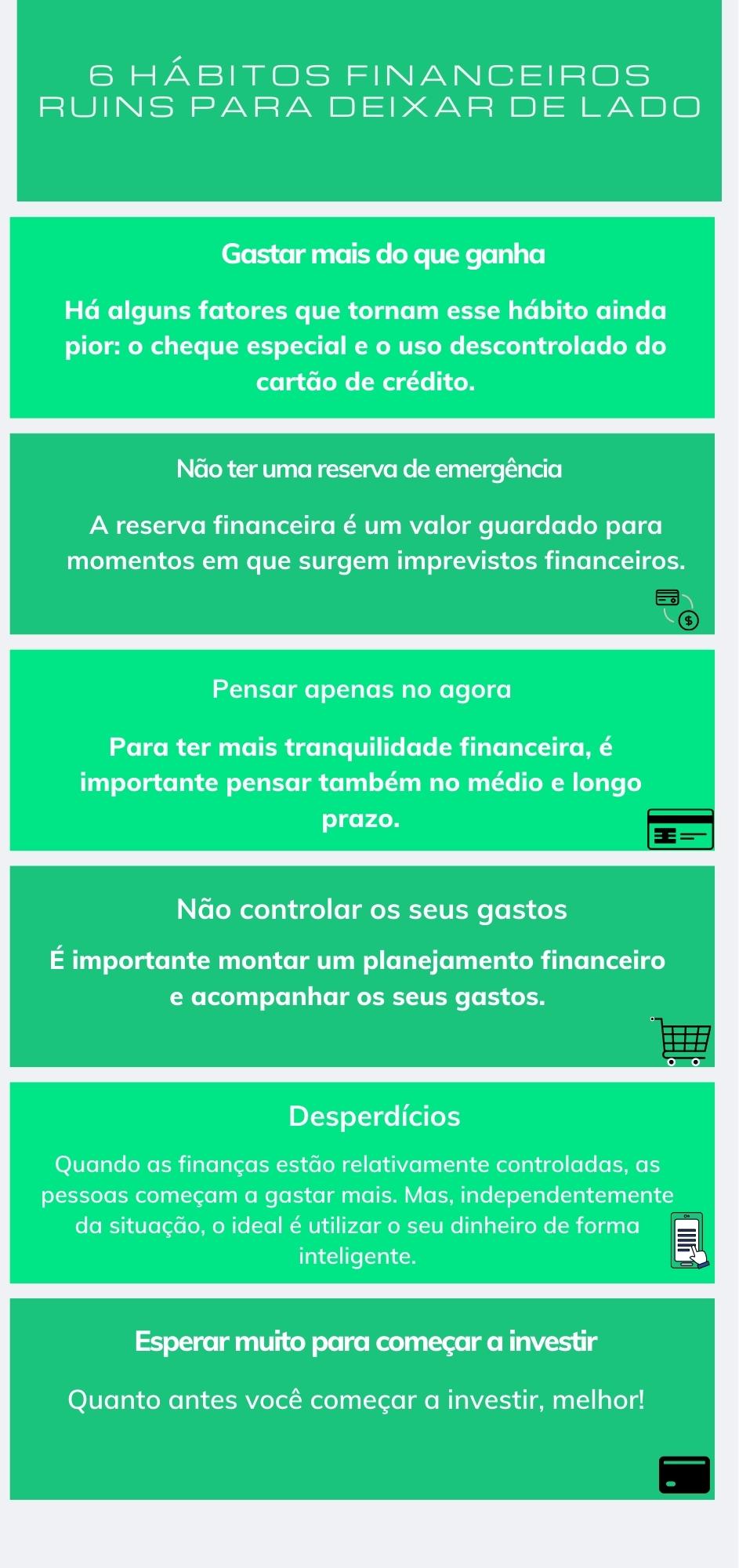
To achieve your goal of saving R$20,000 in a year, it is important that you create the habit of saving and saving, reducing expenses, finding new sources of income and, of course, starting to invest.
To organize your finances and achieve effective results, you also need to start writing down your expenses.
This way, you can increase your financial control and manage your expenses more easily.