
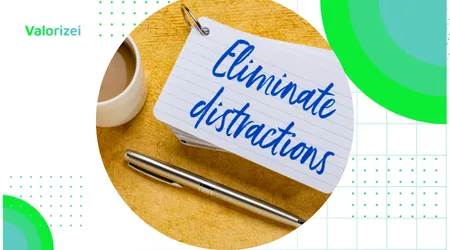
Living a hyper-connected life has transformed the routine of students. Discovering practical ways to... Eliminate digital distractions without having to uninstall social media. It has become essential to ensure passing complex exams.
Announcements
Online platforms offer valuable study groups and essential networking. Therefore, banning these apps creates unnecessary isolation, hindering the natural flow of learning and collaboration among students preparing for university entrance exams.
This practical guide teaches advanced behavioral design techniques to shield your mind. Learn how to strategically configure your devices and regain absolute focus on your daily preparation routine.
Article Summary
- Why do social networks dominate students' attention?
- What native smartphone features block distraction triggers?
- How can behavioral psychology be applied to create barriers to digital addiction?
- Comparison chart: Free focus tools
- Frequently Asked Questions (FAQ)
Why do social networks dominate students' attention?
Modern algorithms operate based on intermittent reward systems that constantly activate dopamine.
There's something almost magnetic about the interface of these platforms: each visual notification signals immediate social validation, directly competing with the effort required by dense, textbook content.
Human attention functions as a limited resource, fiercely contested by large technology corporations.
Understanding this neurological mechanism allows you to stop blaming yourself for chronic lack of focus.
When studying, the mind seeks out methods that require less energy expenditure. The endless feed of social media offers this quick relief, sabotaging the deep process of retaining learning.
Combating this persuasive digital architecture requires strategies that go beyond sheer willpower. It is entirely possible. Eliminate digital distractions without having to uninstall social media., altering the engineering of how the devices are used.
By radically changing your phone's interface, visual stimuli lose their ability to capture your attention.
This technical approach protects your mental energy for moments of complex theoretical review.
What native smartphone features block distraction triggers?
The iOS and Android operating systems have sophisticated tools for managing screen time in an automated way.
Setting these strict limits prevents impulsive access during timed study blocks.
Activate "Focus" or "Do Not Disturb" mode to customize which contacts can break the device's silence.
This screening prevents you from receiving irrelevant messages while you are solving important practice tests.
Changing your phone's screen to grayscale drastically reduces the visual appeal of social media. Vibrant colors are meant to capture the eye, and the gray tone neutralizes this psychological magnetism.
Leaving the device in another room during study sessions reduces baseline cognitive stress. The mere physical presence of the smartphone on the table consumes valuable working memory capacity.
Implementing these small physical and digital barriers returns control of the learning routine to the student.
You will learn how Eliminate digital distractions without having to uninstall social media. Using technology to your advantage.
Use time-based app blocking to restrict Instagram access to your evening leisure time only. This way, social media can feel like a well-deserved reward after you've met your daily goals.
How can behavioral psychology be applied to create barriers to digital addiction?
The friction design technique consists of making the negative habit more difficult to perform immediately. Logging out of social media accounts after each use creates a protective mechanical barrier.
Having to type long passwords every time you open the app breaks the automatic impulse to scroll. This brief, conscious pause helps the mind refocus on the digital books.
Hide social media icons in secondary folders away from your phone's home screen. The extra effort required to locate the app discourages automatic access triggered by boredom.
Replace the habit of checking your phone with healthy micro-habits during official Pomodoro breaks. Drinking a glass of water or stretching oxygenates the brain without causing mental distraction.
Understanding the dynamics of everyday triggers allows the student Eliminate digital distractions without having to uninstall social media. In a sustainable way.
Focus ceases to be a sacrifice and becomes a predictable habit.
Establish commitment agreements with fellow prep course participants to monitor each other's weekly screen time.
Mutual accountability increases commitment to the established schedule.
Studies on digital behavior demonstrate that small changes in the environment reduce students' decision fatigue. Protecting attention improves reading speed and concept retention.
To gain a deeper understanding of how the attention economy shapes our habits, the research center Center for Humane Technology It offers detailed analyses on the impact of notifications on the brain.
Comparison chart: Free focus tools
The table below summarizes the main integrated features available in operating systems to optimize your study sessions without deleting profiles.
Government benefits: Benefits for temporary workers: rights during the 2026 World Cup
| Native Resource | Main Objective | Impact on Study Routine |
| Gray Scale | Reduce the visual appeal of the feed. | Reduces unintentional screen time. |
| Focus Mode (iOS/Android) | Mute notifications by app | Avoid interruptions during the blocks. |
| Time Limits | Restrict daily usage minutes | Transform media into the ultimate reward. |
| Hiding Icons | Eliminate the immediate visual trigger. | Break the automatic way of opening the app. |
How does screen time monitoring improve academic performance?
Analyzing weekly cell phone usage reports provides clarity about the time unconsciously wasted on the internet.
Confronting this real data acts as a reality check for any student.
Discovering that two hours of daily study time were disappearing from your feed helps you readjust your weekly study plan. This recovered time is equivalent to reviewing entire subjects in biology or complex mathematics.
Use this analytical data to establish gradual and realistic reduction goals throughout the month. Drastic changes rarely work; aim to reduce recreational use by ten minutes each day.
Over time, the psychological need to check notifications noticeably decreases in daily life. The effectiveness of [the tool/method] becomes evident. Eliminate digital distractions without having to uninstall social media. to improve in practice tests.
Consistency in studying depends directly on the quality of silence you create around yourself. Protecting your brain from data overload ensures high-quality long-term memorization.
Celebrate the reduction in screen time by converting those precious hours into moments of real offline rest. Walking or listening to music without screens restores cognitive ability for the next day.
Government benefits: Gov.br in 2026: services that can now be resolved without queues.
What mental copywriting strategies help prevent self-sabotage in studying?
The brain constantly seeks quick rewards to alleviate the natural anxiety generated by the routine of exams.
Talking to yourself using logical affirmations breaks the cycle of immediate digital procrastination.
Before opening the photo app, ask yourself if this action brings you closer to getting accepted into university. This analytical pause disarms the autopilot driven by the impulsiveness of the moment.
Write your long-term goals on sticky notes and attach them to the frame of your main study monitor. Looking at your future goals weakens the desire for fleeting pleasures offered by the internet.
View social media as tools for business or study, never as refuges for your daily frustrations.
Changing your perception of platforms completely alters how you interact with them.
By adopting this conscious attitude, it becomes simple. Eliminate digital distractions without having to uninstall social media. during the school year.
Personal discipline replaces the radical and inefficient blocking of apps.
Focus on your daily individual improvement, ignoring the false perfection displayed in other people's profiles. Protecting your mental health is a crucial part of success in any competitive exam.
Learning to manage your attention prepares you for the challenges of the modern, highly technological job market. Focus has become the most scarce and valued skill of the current century.
To deepen your knowledge of productivity based on scientific evidence, the educational platform Google Scholar It indexes academic articles on focus, the neuroscience of learning, and behavior.
Here are three new H2 sections specifically structured to answer real search intents, while maintaining the same standard of scannability, humanized tone, and word limit per paragraph:
How do I set up social media for purely academic purposes?
Transforming your profiles into learning tools requires rigorous and intentional curation of the content consumed.
Follow only teachers, mind mapping channels, and pages focused on helping you pass your exams.
Create a secondary account focused exclusively on educational content, leaving your personal profile logged out during the week.
This drastic separation from digital environments protects your brain from purely recreational stimuli.
This way, when the urge to open the app arises, the feed will deliver helpful reviews of articles. It becomes much simpler. Eliminate digital distractions without having to uninstall social media. while maintaining practical utility.
When is the right time to silence apps during the day?
Digital isolation should begin at least thirty minutes before the start of your first study session. This initial interval allows the mind to slow down and reach a state of deep focus.
Avoid opening Instagram as soon as you wake up, as this habit bombards your brain with cheap dopamine first thing in the morning.
Start your day by prioritizing theoretical reading or solving the most complex problems on the schedule.
Also, establish a complete digital lockdown schedule during the night to protect your restful sleep.
Sleeping well stabilizes the neurotransmitters responsible for consolidating long-term memory.
Government benefits: SinPatinhas: How the new national pet registry works in Brazil
What auxiliary applications complement distraction blocking on the computer?
For those who study using a laptop, browser extensions like Cold Turkey or StayFocusd are indispensable.
They prevent access to specific domains during times determined by the user.
Enabling these barriers in web browsers extends cognitive protection beyond the screens of personal smartphones.
You create a shielded, high-performance ecosystem ideal for absorbing complex content.
Conclusion
Mastering one's own attention in the contemporary landscape presupposes digital maturity and the application of consistent behavioral techniques.
A focused student doesn't need to give up modern virtual connections to reach the top.
By adjusting phone settings and creating healthy boundaries, learning flows with maximum daily efficiency.
Success in studies results from a smart balance between technology and deep concentration.
FAQ (Frequently Asked Questions) section
Is it really possible to study well while keeping social media on your phone?
Yes, as long as notifications are completely disabled and strict time limits are set. The key is to control access instead of being controlled by daily alerts.
Does grayscale mode really work to reduce addiction?
Several behavioral psychology studies prove that the absence of vibrant colors discourages the brain. The feed loses its visual reward aspect, quickly making browsing tedious.
How many minutes of break should I take between blocks of concentrated study?
The traditional Pomodoro Technique recommends a five-minute break for every twenty-five minutes of focused work. Use this time to breathe and walk around, avoiding checking social media during this period.