
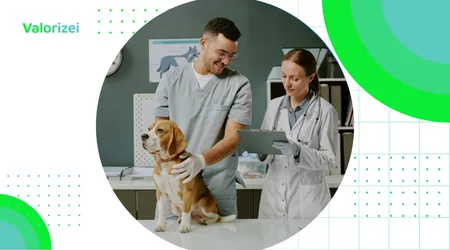
O SinPatinhas It was consolidated in 2026 as the backbone of domestic animal management in Brazil, leaving behind that era of municipal paper registries that looked more like forgotten forms in public drawers.
Announcements
This platform is not just a cold database; it solves a historical fragmentation that left guardians helpless in cases of theft or escapes outside their state of origin, creating a real legal protection network.
The system operates in a unified way to provide information security, allowing animal welfare policies to move from the realm of intentions to actions based on solid and up-to-date demographic statistics.
Table of Contents
- The genesis of the national system and the end of documentary chaos.
- The digital path to registering your pet.
- Microchipping: the technology behind the code.
- The practical impact on the daily routines of tutors and municipalities.
- The dilemma of privacy and data protection.
- FAQ: Direct answers to common questions.
What is SinPatinhas and what is its real purpose?
Far beyond a simple census, the National Pet Identification System, the SinPatinhasIt functions as a traceability ecosystem for dogs, cats, and even legally registered exotic species.
The project was born from a strategic partnership between the Federal Government and veterinary entities, targeting the Achilles' heel of animal welfare: impunity for abandonment and the lack of widespread sanitary control.
Unlike previous attempts that failed due to a lack of updates, this tool uses cloud computing so that clinics and zoonosis centers can access vital data in seconds, without territorial bureaucracy.
The existence of this unique digital identity is a game-changer, as it places Brazil at a level of oversight that discourages illegal trade and speeds up the rescue of lost animals.
How do I navigate the digital registration process?
To include your pet in SinPatinhasThe first step is to ensure that your account in the government's unified system has silver or gold security level, a necessary filter against identity fraud.
Within the platform, filling out the form requires attention to detail: clear photos, particular scars, and a complete vaccination history generate the General Animal Registry (RGA), now with indisputable national validity.
The system is not static; it acts almost like a personal assistant, sending reminders about immunization boosters and informing about free spaying and neutering campaigns taking place near the registered address.
The interface was designed for mobile use, respecting the agility that modern life demands, thus burying once and for all the in-person queues at city halls that were previously the terror of busy guardians.
The migration of old data to the federal network occurs smoothly in cities that already have integration, provided that the responsible individual's CPF (Brazilian taxpayer ID) is correctly linked to pre-existing records.
+ Government social programs that help with family budgets.
Which animals are automatically included in the system's radar?
Although dogs and cats dominate the statistics, the 2026 regulation extended the state's reach to ornamental birds and small domestic mammals, seeking to close loopholes in the wildlife trade.
This requirement should not be seen as a burden, but as a necessary network of civil responsibility to curb abandonment, which can now be traced directly back to the person who holds legal custody.
In today's pet market, professional breeders and pet shops are required to begin the registration process. SinPatinhas, delivering the animal already microchipped and transferring electronic ownership at the time of purchase.
Even for those who choose to adopt from shelters, registration becomes a passport to public health services and for obtaining transit permits for long-distance travel.
The table below illustrates how adoption of the system has changed the Brazilian landscape in just a few years, showing that the digitalization of animal welfare is an irreversible trend.
Overview of Animal Identification: Evolution 2024-2026
| Progress Indicator | Reality in 2024 | Reality in 2026 | Goal for 2027 |
| Pets with Active Registration | 2.5 Million | 18.7 Million | 35 Million |
| Connected Clinics | 15% | 72% | 95% |
| Integrated Cities | 420 | 3.100 | 5.570 |
| Recovery of Lost Items | 12% | 48% | 65% |
The science behind the microchip and its national integration.
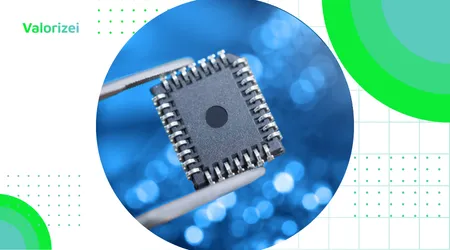
The gear that makes the SinPatinhas The most effective technology is the subcutaneous microchip, a device the size of a grain of rice that carries a globally unique and unforgeable numerical sequence.
Many people still confuse the technology with an active tracker, but the chip is passive: it works like an internal ID card that only reveals its information when consulted by a specific radio frequency reader.
When a stray animal is found, scanning its code allows immediate access to the federal database, shortening the distressing time for families searching for their pets.
This proof of ownership is definitive in cases of theft, serving as material evidence in legal proceedings, something that photos or simple collars often cannot support with such strength.
Following the international ISO standard, this chip also simplifies the lives of those traveling abroad, being accepted as the standard identification for issuing the International Zoosanitary Certificate.
What are the real advantages for the tutor's daily life?
Digitization brings the obvious benefit of retiring old paper vaccination records, which invariably ended up torn or lost during a move, generating doubts about the animal's immunization status.
For the SinPatinhasAccess to social benefits is facilitated; registered pet owners have priority in population control programs and can obtain discounts at veterinary pharmacy chains that are partners of the national program.
The continuity of medical care gains an ally, since the veterinarian can consult the history of allergic reactions or previous surgeries even if the care occurs in an emergency room in another state.
Transferring pet ownership is now as simple as making a Pix payment, ensuring the new owner assumes legal responsibilities without leaving any loose ends in the government database.
The portal also filters quality information for citizens, combating fake news about nutrition and behavior, which raises the average level of care and promotes the concept of One Health.
+ New Desenrola Brasil: government launches new package for debt renegotiation.
Technical validation by the Veterinary Medicine Council
This curation process prevents amateur or dangerous information from polluting the database, maintaining the integrity of the statistics that guide major vaccination campaigns and zoonosis control in the country.
The direct connection with regional councils allows for much more agile health surveillance, identifying clinics that operate outside the regulations and ensuring that the pet receives ethical and safe care.
Professionals use the system to report serious illnesses in real time, allowing the government to act preventively before local outbreaks turn into public health crises for animals and humans.
This alliance between rigorous veterinary technical expertise and the reach of federal technology is what gives the system the necessary authority to be respected by all of organized civil society.
O CFMV It acts as the technical guardian of the system, ensuring that only veterinarians with active registration can validate surgical procedures and microchip applications on the platform.
Privacy, LGPD (Brazilian General Data Protection Law), and the confidentiality of sensitive information.
There is legitimate concern about how the government manages data from SinPatinhasHowever, the system's architecture was built under the strict precepts of the General Data Protection Law.
Access to the guardian's data is restricted to situations of proven need, and each viewing by public agents or veterinarians generates an auditable log, discouraging any attempt at misuse.
Information such as address and income is protected by layers of encryption, serving only for the planning of public policies or for the logistics of returning animals found on public roads.
Citizens retain control over the visibility of their pet's profile, being able to manage what appears in public consultations and what remains restricted to the secure environment of the competent authorities.
This robust structure ensures that the national registry is not just another obligation, but a reliable tool for Brazilians who see their pet as a member of the family.
Final Considerations
The advent of SinPatinhas This marks the end of amateurism in animal welfare management in Brazil, offering an infrastructure that protects both citizens and the sentient beings who depend on our care.
Registering your pet is more than just complying with a rule; it's ensuring that it has a digital voice and protection that transcends the boundaries of your neighborhood or city.
Technology, when applied responsibly and with a scientific basis, becomes the greatest ally of empathy and social justice within the contemporary veterinary landscape.
To understand the legal ramifications and government support for animal rights, it is worth consulting the portal of... Ministry of Environment and Climate Change.
FAQ – Frequently Asked Questions
1. Is there a monthly cost to keep a pet at SinPatinhas?
No. The system is a free public service. The only optional investment is the fee charged by private clinics for the technical application of the microchip.
2. Does registration replace the collar with an identification tag?
It doesn't replace it, but it complements it. The license plate is visual and immediately apparent to anyone, while the national system is the legal and definitive proof of ownership in complex cases.
3. What should I do if I adopt an animal that is already registered?
The previous owner must initiate the transfer through the system; if the owner is unknown, the veterinarian may request an update after verifying the rescue and responsible ownership.
4. Does the system work in locations without internet signal?
The microchip can be read offline via scanner, but accessing detailed data requires an internet connection. Enforcement officers have tablets with local cache for remote areas.
5. Can I register wild animals with authorization from IBAMA?
Yes. The system allows for the integration of environmental permits, facilitating the monitoring of exotic species legally kept in domestic environments.