

Learn what a performance fee is and how it is calculated
Announcements
If you are interested in investment funds, you should know what a performance fee and management fee are.
At first, these charges may seem complicated. However, it’s not that difficult to understand how they actually work!
With this in mind, we have prepared an article to explain what this is.
Check out all the information about the performance fee below and understand why you need to pay attention to this when choosing an investment fund.

What is performance fee?
The performance fee is applied to a fund's income.
Basically, it works as a kind of reward. It is charged when the fund's profitability exceeds a financial benchmark, like Ibovespa or CDI, for example.
To help you understand better, we’ll give you an example.
Imagine a fund that has the Ibovespa as its reference index. Therefore, if the Ibovespa yields 100% and the fund yields 130%, the performance fee will be collected on the 30% difference.
The performance fee serves to motivate the manager and the team to find good products to make up the fund, thus ensuring that it can exceed the profitability target.
This way, everyone wins: the investors, who are able to raise more, and the manager, who will be rewarded for his work.
It is important to remember that the performance fee is only charged in some investment funds.
How is the performance fee charged?
The performance fee is charged as stated in the fund contract.
For this reason, it must be carefully analyzed by the investor.
In practice, it is charged on the excess profitability and, as we said, it is described in the fund's regulations.
The fund is free to choose the financial benchmark that will guide its operations. The charge is made semi-annually and automatically by the fund.
In addition, it also has the “waterline” compensation system.
What is Waterline?
Waterline is the representation of a base share of a given Investment Fund, which aims to calculate a performance rate.
The performance fee can only be charged if the fund has a higher profitability than the benchmark.
However, if the fund's profitability is lower than the previously stipulated reference index, the negative rate can be deducted in the period in which it has a positive rate.
Therefore, the waterline and the performance fee are correlated with each other. The purpose of the fund's base share is to calculate the performance fee. In addition, it is this that will generate the waterline.

Which investment funds can charge a performance fee?
In general, only actively managed funds can charge a performance fee.
These funds are those in which the manager actively works to exceed the profitability of the performance parameter.
Therefore, the following fall under this type of fund:
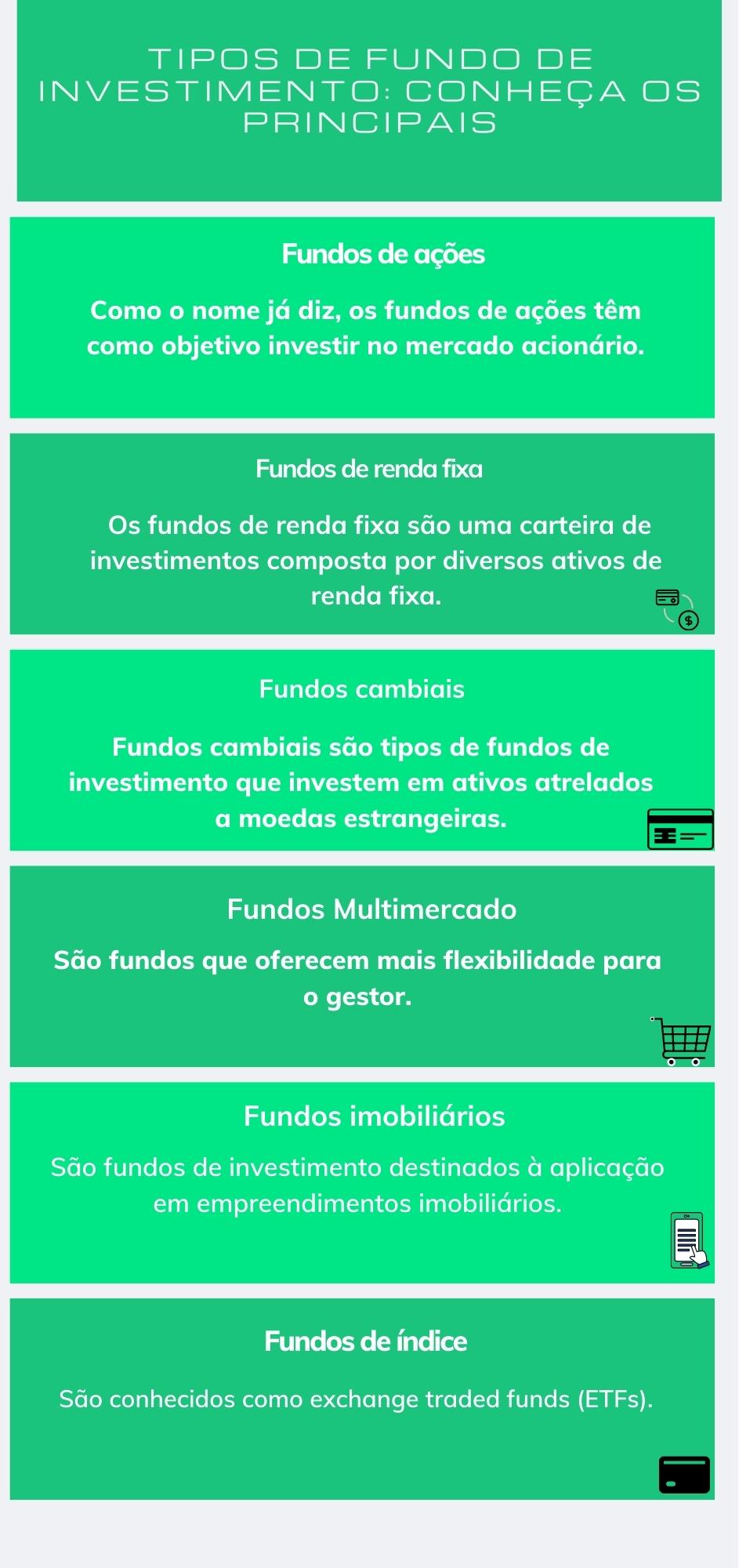
• Equity funds: These are funds created with the objective of investing in the stock market. The manager is responsible for the investments, reallocations and analyses.
• Multimarket funds: is one that allocates the capital of its shareholders in different market options, always with the aim of finding the best profitability. They follow a pre-determined asset allocation strategy.
• Exchange funds: are investment funds that invest in assets linked to foreign currencies.
Fixed income funds and other funds cannot charge a performance fee, as they are considered passive funds.
What is the difference between performance and administration fees?
The performance fee is charged on excess profitability.
In other words, it is an additional fee that is paid to the manager if he or she performs above the benchmark index.
The administration fee of funds is the remuneration paid for the provision of management and administration services.
It is paid by all shareholders of an investment fund.
This fee is charged as an annual percentage. In other words, when investing their resources in a fund, the investor must pay X% per year for this fee.
Therefore, the amount charged is proportional to the amount applied.
What other costs are incurred when investing in funds?
In addition to management and performance fees, which are the most common, there are other fees that may be charged on investment funds.
Find out what they are:
Entrance fee
The entry fee is a percentage charged at the time of application. Therefore, it reduces the amount invested from the beginning.
It covers the costs of administering and maintaining the investment.
Nowadays, charging this fee is no longer so common.
Exit fee
An exit fee is a fee charged on some funds at the time of redemption.
In cases where it is provided for, its value is usually 5% on the redeemed amount.
The exit fee is charged when the redemption request is made in advance (before the redemption deadline), which can undoubtedly compromise profitability.
Taxes
It is important to mention that taxes are also levied on the profitability of investment funds: Income Tax (IR) and the Tax on Financial Transactions (IOF).
• IOF: IOF is levied on income from redemptions made in a period of less than 30 days.
• Income Tax (IR): IR is charged at the time of redemption and is only levied on income. It is also charged in advance through the come-cotas.
Quota-eater
The quota-eating tax is not actually a tax.
In fact, it is part of the taxes that affect the fund's income.
It is charged every six months, on the last business day of May and November.
Conclusion
Now you know what a performance fee is and what other fees are charged on the investment fund.
To choose the best fund for your portfolio, it is important to take into account your investor profile, financial objectives and market experience.