
Cryptocurrency scams: don't fall for them
Cryptocurrency scams are becoming more common! Learn how to protect yourself
Announcements
You've probably read or watched news articles about cryptocurrency scams, right? Unfortunately, these scams have become increasingly common.
As you begin to deal with new mechanisms of digital currencies, popularly known as cryptocurrencies, you soon realize the risks involved in this market.
But we are not just talking about the risk of volatility, but also about online fraud and scams.
To help you avoid problems like these and protect your cryptocurrency investment, we will show you what they are. the most common scams and give some protection tips!
Read on to find out more.
What are cryptocurrencies?
Cryptocurrencies are centralized digital currencies. This means that they are not controlled and managed by any specific body or country.
Digital currencies are created on a blockchain network, which facilitates the process of recording transactions.
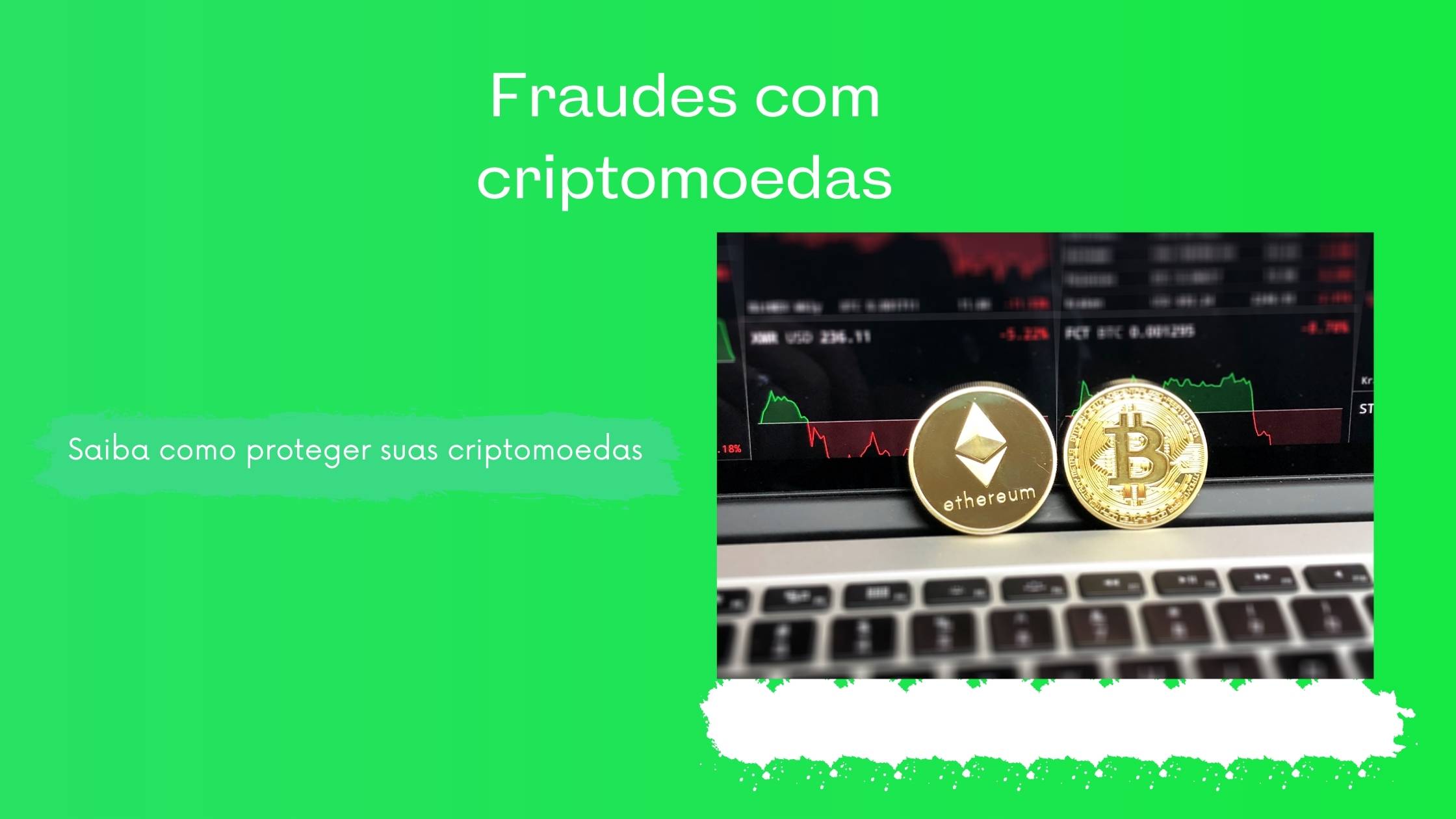
The most common cryptocurrency It's Bitcoin. However, there are several of them on the market, such as Ethereum, Litecoin, Ripple, among others.
Since we are talking about virtual currencies, it is not possible to use them to make a physical exchange.
In other words, cryptocurrencies only exist on the internet. You can store them in digital wallets called Exchanges.
Cryptocurrency scams: what are the most common scams?
As cryptocurrencies become increasingly valuable, they are starting to attract the attention of scammers.
And that is why, unfortunately, there are so many cases of fraud.
To protect yourself, you need to be aware of the main types of scams, which are currently:
1. Fake wallets
These fake software can be found inside official app stores, such as Google Play.
This makes it harder for some investors to recognize when software is genuine or not.
These fake wallets promise to store the user's money safely. However, when the deposit is made, the amount is transferred to the user's account. cybercriminals.
Our tip is to always look for wallets with a good reputation in the market and be careful with applications that have been recently launched.
2. Promises of quick gains
Promises of quick gains are one of the most common scams with cryptocurrencies.
This trap is used by scammers as a strategy to attract the attention of victims who are starting their operations in the digital currency market.
In these cases, the scammer in question promises above-average earnings very quickly.
And that's what makes some people, with little experience or who are desperate to make a profit, end up at a loss.
3. Financial pyramids
Financial pyramids are scams in the world of cryptocurrencies.
The goal is to lure victims with a supposed promise of high and quick gains. Here, scammers recruit people to summon others and so on.
Victims often enter into financial projects that never existed.
The scam usually starts like this: to become part of the company, you have to deposit a certain amount. In this way, those at the top of the pyramid start to profit from other people joining the scheme.
Within the pyramids, there are also those linked to cryptocurrency mining.
When this happens, users pay to gain a supposed speed. The promise is that they will get their money back when new users purchase the plan.
The problem is that no digital currency will actually be mined.
4. Phishing
This fraud does not only exist in the cryptocurrency market.
In fact, phishing is an extremely common virtual scam, which has already caused losses for many companies in Brazil.
This technique can arise through an email, apparently sent by the company that develops your digital wallet, asking for password confirmation.
In this way, the user ends up providing some confidential data, which allows hackers to access the cryptocurrencies.
To avoid this type of scam, never click on suspicious links.
In fact, even if the message appears to be trustworthy, before entering confidential information, contact the company to check the situation.
5. Fake brokers
You’ve probably heard that there are fake brokers on the market.
Cryptocurrency exchanges have a platform similar to that of stock brokers. Their goal is to facilitate negotiations by connecting the parties involved (buyers and sellers).
The problem is that creating fake exchanges has become commonplace.
In this case, criminals develop fake platforms that look very similar to the real ones. When the user carries out the transaction, they end up sending money to the scammers' account.

How to protect yourself from cryptocurrency scams?
Here's how to protect your cryptocurrencies from common internet scams:
Be wary of promises of exorbitant gains
Cryptocurrencies, in fact, are considered an investment with excellent earning possibilities.
However, it is important to remember that there are several risks involved. Furthermore, the purchase of digital currencies must be initiated by the user.
In other words, be careful with promises of good returns and advertisements with cryptocurrencies.
Protect your personal data
Never share your personal data on unknown platforms or platforms that you don't yet know how they work.
If you receive any email asking for personal information, contact the company. Many of the offers and messages that arrive via email are advertised by hackers.
Use antivirus
Amid so many cyber threats, antiviruses are essential to protect your data and maintain your security in the virtual environment.
Protect both your cell phone and your computer with a good antivirus, as these software programs basically work as a safety net to protect you from dangerous access and cryptocurrency fraud.
Although there are free options on the market, it is important to remember that the best antiviruses are paid.

Conclusion
If you want to start investing in cryptocurrencies to protect yourself from inflation and diversify your investments, be careful of the scams that exist in the market.
When purchasing cryptocurrencies, always look for renowned platforms that have a good reputation.
Furthermore, be careful with promises of quick and miraculous gains, since despite the possibility of appreciation, there are risks involved (such as volatility) and, unfortunately, fraud in the cryptocurrency market.