
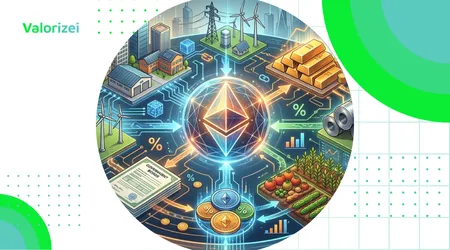
The concept of RWA (Real World Assets) has established itself as the definitive bridge between traditional finance and the technological efficiency of blockchain, transforming physical assets into digital tokens.
Announcements
In this comprehensive guide, we will explore how this innovation allows for the fractionalization of properties, credits, and commodities, offering superior returns and immediate liquidity for the modern investor seeking diversification.
Summary
- What are Real World Assets and how do they work?
- The advantages of investing in tokenized real assets.
- Main categories: Real Estate, Credit, and Treasury.
- Risks and security in the digital asset ecosystem.
- Step-by-step guide to start investing today.
What is RWA and why has this acronym changed the financial market?
The acronym refers to the digital representation of tangible or financial assets on a decentralized network, allowing physical goods to be traded as easily as cryptocurrency.
Through smart contracts, investors acquire fractional shares of credit rights or real estate, eliminating costly intermediaries and drastically reducing the administrative fees present in conventional investment funds.
This technology democratizes access to markets previously restricted to the very wealthy, allowing anyone to participate in structured transactions with extremely low and accessible initial investments.
The integration of RWA The global financial system in 2026 brought total transparency, as each transaction is recorded immutably, guaranteeing the authenticity and ownership of the asset.
How does tokenization of real assets work in practice?
The process begins with the physical asset being held in custody by a regulated entity, which issues digital tokens corresponding to the total or partial value of the asset in question.
Subsequently, these tokens are made available on trading platforms, where investors buy and sell their positions in real time, taking advantage of liquidity 24 hours a day, seven days a week.
The major advantage lies in the programmability of the returns, where dividends or interest are automatically distributed to token holders through secure algorithms audited by specialized companies.
By adopting the RWAIn this way, companies raise capital more efficiently, while investors gain exposure to resilient sectors of the real economy with a high-performance technological layer.
What are the main types of assets available on the market?
Currently, the private credit sector leads in issuances, allowing investors to finance solid companies or agribusiness in exchange for fixed rates that exceed the traditional Selic rate.
The real estate market also stands out, transforming rentals of logistics warehouses or commercial buildings into monthly cash flows deposited directly into the user's digital wallet in a simple way.
Furthermore, the tokenization of federal government bonds has gained traction, offering the security of the Brazilian Treasury Direct program with the flexibility of instant trading and fractionalization into small decimal parts.
Investing in RWA It requires understanding that each asset class has specific guarantees, ranging from real estate mortgages to trade receivables, varying according to the issuer and the platform chosen.
Why do real assets boost your fixed income portfolio?
Unlike traditional banking products, tokenized assets typically offer lower spreads, resulting in a greater pass-through of profitability to the end investor over time.
Financial disintermediation allows rates of return, which were previously retained by large banking institutions, to now be distributed equitably among participants in the decentralized network.
Many projects offer returns linked to inflation plus a robust fixed rate, protecting purchasing power and ensuring consistent asset growth above market metrics.
The strategy of RWA It focuses on intelligent diversification, mitigating systemic risks by decoupling part of the assets from the extreme volatility of the stock market or pure digital currencies.
++ Investments focused on family asset protection
Comparison: Traditional Investment vs. Tokenization
The table below demonstrates the fundamental differences between the investment models, highlighting how technology optimizes the use of capital and improves the end-user experience.
++ Fixed income in 2026: does it still make sense after the new interest rate cycle in Brazil?
| Feature | Traditional Investment | Investment in RWA (2026) |
| Liquidity | D+1 to D+30 (or months) | Instant (24/7) |
| Access | Banks and Brokerage Firms | Blockchain Platforms / Apps |
| Fees | High (Administration/Custody) | Low (Network/Issuance Fees) |
| Transparency | Quarterly Reports | Real-time (on-chain) auditing |
| Entry Barrier | Frequently High | Starting from R$ 10.00 |
What are the advantages of investing in real assets via blockchain?
The main advantage is self-custody, allowing the investor to have complete control over their assets in a digital wallet, without depending on the solvency of a single institution.
Operational efficiency reduces transaction settlement time, transforming what previously took days of bureaucracy into just a few seconds after the transaction is confirmed on the network.
Furthermore, the interoperability of decentralized finance allows the use of its tokens. RWA as collateral in other financial transactions, enhancing the leverage strategy in a controlled and secure manner.
The globalization of investments allows a Brazilian to invest in real estate in the United States or corporate debt in Europe with the same ease as buying a domestic bond today.
Where can I find the best investment opportunities?
There are specialized platforms that act as marketplaces for real assets, rigorously curating each project before making it available to the system's registered investor base.
It is essential to seek out companies that possess the appropriate regulatory licenses and provide clear legal documentation regarding the backing of the tokens, ensuring that legal rights are properly protected.
Analyze the issuers' track record and the technical quality of their smart contracts, verifying whether they have undergone external audits by reputable cybersecurity firms in the current international market.
The growth of RWA It has attracted major global banks, which now offer their own tokenized products, combining the trust of traditional brands with the innovation of modern distributed technological infrastructure.
What are the risks involved and how can one protect oneself adequately?
Like any investment, there are credit risks related to the issuer's ability to meet its obligations, making it essential to analyze the rating of each offer available on the platform.
Technological risk must also be considered, although the use of consolidated networks and audited contracts drastically reduces the possibility of critical failures or malicious intrusions into the source code.
Keep your private keys secure and use two-factor authentication, preferably via physical devices, to prevent unauthorized access to your investment account and digital wallets.
Diversification among different types of RWA Having separate issuers remains the best strategy for protecting capital against unforeseen events in specific sectors of the real or digital economy.
The future of fixed income: What to expect in the coming years?
The trend is for most global financial assets to migrate to blockchain platforms, eliminating the frictions of the legacy system and creating a unified, global financial market.
It is expected that the regulations will become even clearer and more favorable, encouraging the entry of conservative institutional investors seeking efficiency and transparency on a large scale for their portfolios.
Personalizing financial products will allow investors to create their own asset baskets, adjusting risk and return according to specific life or retirement goals.
The consolidation of RWA As a mainstream asset class, it will transform the way we save, making investing a seamless, inexpensive experience integrated into our digital daily lives.
The New Frontier of Heritage
Investing in tokenized real assets represents the pinnacle of financial evolution, combining the security of the physical world with the unprecedented agility of next-generation digital networks.
By adopting this model, you position yourself ahead of the innovation curve, taking advantage of differentiated rates of return and an ease of asset management impossible under traditional banking models.
Commitment to financial education and choosing reliable technology partners are the cornerstones of success in this new horizon of possibilities that opens up for everyone.
Exploring the universe RWA Ultimately, it's about taking ownership of your financial life, using modern tools to build a solid, profitable, and truly diversified future over time.
Frequently Asked Questions (FAQ)
What happens if the tokenization platform collapses?
The assets have real legal backing, and the tokens represent direct ownership or credit rights, ensuring that the investor retains their rights regardless of the platform's health.
Do I need a lot of money to start investing in real assets?
No, one of the great advantages of the technology is fractional ownership, allowing you to acquire small parts of valuable assets with investments starting from symbolic amounts for any budget.
How do I declare investments in tokens on my income tax return?
The Brazilian Federal Revenue Service has specific codes for crypto assets and tokens; it is essential to keep a record of acquisition and follow current guidelines to avoid issues with the national tax authorities.
Is it possible to sell my tokens at any time?
Yes, provided there is liquidity in the secondary market of your chosen platform, you can make the sale and receive the corresponding amount almost instantly in your digital account.
To deepen your understanding of the impact of new technologies on the market, visit the portal of... ANBIMA, an authority on standards for capital markets.