

Find out exactly how the wrong pix scam works and how you can protect yourself
Announcements
The wrong pix scam, unfortunately, is becoming common and claiming new victims.
There is no doubt that Pix It is an excellent tool, which has brought several benefits to our routine and made it easier to make payments.
However, scammers are using the new resource to scam Brazilians.
To help you protect yourself, we’ll talk more about this and other scams. Enjoy reading!

What is the wrong Pix scam?
In the wrong Pix scam, the criminal in question sends proof of transfer via Pix.
In other words, he forges proof of transfer via a bank's Pix and sends it to you via WhatsApp or email.
Obviously, you will find the deposit slip strange and wonder what it really is.
When this happens, the criminal contacts you, saying that they made a mistake when making the Pix transfer and asks you to refund the amount to their account.
Another similar scam is the scheduling scam. In this situation, the scammer schedules the transfer to the victim's account and contacts them, informing them of the error and requesting a refund.
Thus, the victim ends up transferring the amount, while the scammer suspends the appointment.
How to protect yourself from the wrong Pix scam?
Before refunding any amount, wait for confirmation of the money in your bank account.
Pix accepts the return of transferred amounts – you just need to click on the credited amount.
If there is any type of error in the transfer, you can return it through the bank's app.
What are the other Pix scams?
As you already know, the wrong Pix scam is not the only strategy used by criminals to steal money from victims.
Unfortunately, every day, many Brazilians fall into this type of trap.
To prevent this and warn your friends, it is essential that you know the most common Pix scams. Take a look:

1. WhatsApp Cloning
This is one of the most common Pix scams.
In fact, it started to be practiced even before Pix was launched. For this reason, it is very likely that you know someone who has been a victim of this.
Basically, it works as follows:
The first step is to enter into a contract with the victim. At this point, the criminal pretends to be a company representative and asks the account owner for a security code.
In other words, the criminal says that this code is necessary to update or confirm the victim's registration.
But in reality, the scammer does not work for the company in question. Furthermore, this code allows the theft of your profile.
By accessing your profile, the criminal can impersonate you and start asking your contacts for money.
If one of them actually transfers the money, it is very difficult to get it back, as the transfer was made voluntarily.
To avoid falling for this type of scam, It is essential that you enable two-step authentication.
How to enable two-step verification on WhatsApp?
• Open WhatsApp and click on Settings
• Tap Account > 2-Step Verification > Turn On
• Enter a 6-digit PIN and then confirm it
• Add your email to retrieve the code in case you forget it in the future (if you don't want to add an email, click skip)
• Tap Next
• Confirm the email address and tap Save or OK
If you do not add an email and, at some point, forget your PIN, you need to wait 7 days to reset it.
2. Fake loan scam
With your main details in hand, scammers contact you, saying they work for banks and financial institutions.
They generally offer exclusive loan opportunities with very advantageous payment terms.
But the truth is that this loan is a scam, not a new opportunity.
In fact, the criminal can even simulate several options, providing the CNPJ of a real institution so that you can take out the loan.
However, when making the credit available, the scammer asks for an advance payment, saying that this is necessary for your loan application to be approved.
When the victim believes the scammer's story, they end up making the transfer via Pix. Only later do they discover that the loan opportunity did not exist. This means they end up losing out.
3. Pix registration scam
Since Pix was launched, emails and even messages on social media and other messages have been circulating inviting users to register a Pix key.
These messages are often not being sent by a trusted financial institution, but rather by scammers.
The text ends up being quite convincing, as it talks about all the advantages of the new payment method.
The user, convinced to register the key, fills out a false registration with the supposed Pix keys, which are personal data.
Furthermore, the fake website asks you to enter your full name and even passwords.
What happens in this case is that in addition to not registering your Pix key, criminals now have access to your personal data. This way, they can even commit fraud in your name.
Generally, financial institutions do not contact consumers to request Pix registration.
In fact, you can register using your bank's app whenever you want – quickly and securely.
If you have any questions, contact your bank's call center through one of the company's official communication channels!
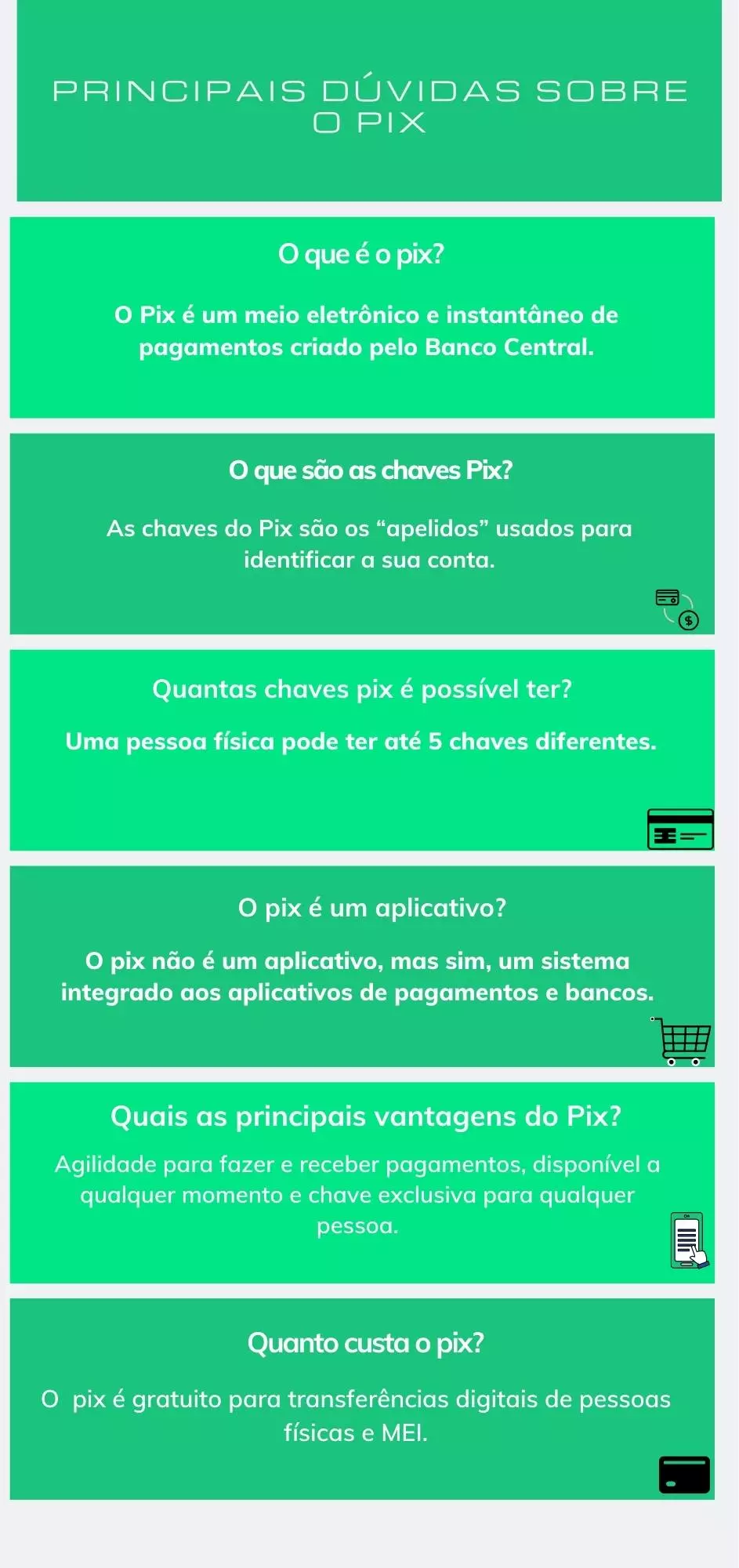
Conclusion
The wrong pix scam is becoming an increasingly common scam.
Therefore, it is essential to be very careful with any type of message you receive regarding your Pix key and transfers.
Furthermore, it is also important to warn your friends and acquaintances, so that these people do not become new victims of virtual scams!