

Learn more about FIP Infrastructure and its features
Announcements
FIP Infrastructure is not a well-known investment, as it is restricted to qualified investors.
After all, this financial asset, although it brings good profit possibilities, also offers more risks to investors.
And if you want to know more about FIP Infrastructure, keep reading. We will explain everything about the subject.

What is a Private Equity Investment Fund (FIP)?
To understand what FIP Infrastructure is, you first need to understand what a Private Equity Investment Fund (FIP) is.
This investment, also called Private Equity, is intended for qualified investors and must be constituted in the form of a closed condominium.
The goal of FIP is to actively participate in business growth. That is why the focus is on privately held companies.
Profit is obtained from the development and growth of the company over the years.
Since investments are directed towards growing companies, the risks are slightly higher.
For this reason, it is restricted to qualified investors, who are individuals and legal entities that have more than R$1 million invested or have a certification approved by the CVM.
What are the types of Equity Investment Funds (FIP)?
Within FIPs, there is a subdivision of different types.
This means that each one has its own characteristics and allocation strategies. Find out what they are:
• Seed capital: These FIPs invest in companies with annual revenues of less than R$16 million. The last three years of the fiscal year must be analyzed for this definition.
• Emerging companies: The objective is to invest in companies or limited liability companies with gross revenue of up to R$300 million. The criteria are the same for the FIP Capital Semente, that is, the last three financial years will be considered.
• Infrastructure: The assets are invested in publicly or privately held companies that work with infrastructure projects, carrying out research and bringing development and innovation.
• Multi-strategy: As the name suggests, this FIP can adopt several types of strategy. In other words, there are possibilities for allocating resources in all the strategies we mentioned.

Infrastructure FIP: how infrastructure equity investment funds work
FIP Infraestrutura invests in infrastructure projects in the country.
In this case, the equity is invested in securities issued by publicly or privately held corporations, which focus on infrastructure and innovation projects.
The areas are basic sanitation, energy, transportation, irritation, water, among others.
An Infrastructure FIP (FIP-IE) must have at least 5 shareholders. In fact, no shareholder can have more than 40% of the shares issued by FIP-IE or obtain a return greater than 40% of the fund's income.
There is a big advantage to this specific type of FIP: tax exemption for individuals.
Who can invest in an Infrastructure FIP?
In the primary market (launch of new shares on the market), this investment is restricted to qualified and professional investors.
Therefore, it is necessary to have more than R$ 1 million demonstrably invested, to have passed technical qualification exams or to have certifications approved by CVM.
In the secondary market (an environment in which investors buy and sell assets among themselves), it is possible to acquire shares without being a qualified or professional investor.
Infrastructure market in Brazil
Although it has good growth potential, this sector still suffers from problems such as quality highways and airports.
Investment opportunities, especially with regulatory frameworks, can bring more security and greater sources of funding with the development of financing via the capital markets.
Source: Expert XP
What are the main advantages of Equity Investment Funds (FIP)?
Equity Investment Funds offer several advantages to investors.
Among them, we can mention:
Professional management
Professional management is very important for those looking for security and efficiency.
These specialists have the technical skills to analyze the return prospects and the risks involved. This allows them to create a good allocation strategy.
Good return potential
There are good possibilities for gains in the medium and long term.
For this reason, FIPs are highly sought after by bold investors, that is, those who are willing to take more risks, as long as there is a good chance of obtaining great returns in the future.
Corporate Governance
One of the main characteristics of FIPs is their proximity to business management.
Corporate governance is basically a set of practices for managing a company.
This way, it becomes possible to think of strategies to strengthen the business and control operations.
Therefore, we can say that one of the objectives of investors is not only to add value to the growing company, but also to positively influence management with good corporate governance practices.
This is undoubtedly one of the main advantages of FIPs. After all, this is something that does not happen, at least not directly, with other related forms of investment, such as real estate funds, for example.
Portfolio diversification
Diversifying your portfolio is essential for those who want to increase opportunities and reduce risks.
In fact, as FIP is a riskier investment than others, the ideal is for investors interested in these funds to create a good asset diversification strategy.
What are the risks of investing in FIPs?
Investing in FIPs can be very advantageous for some corporate investors.
However, risks must always be considered.
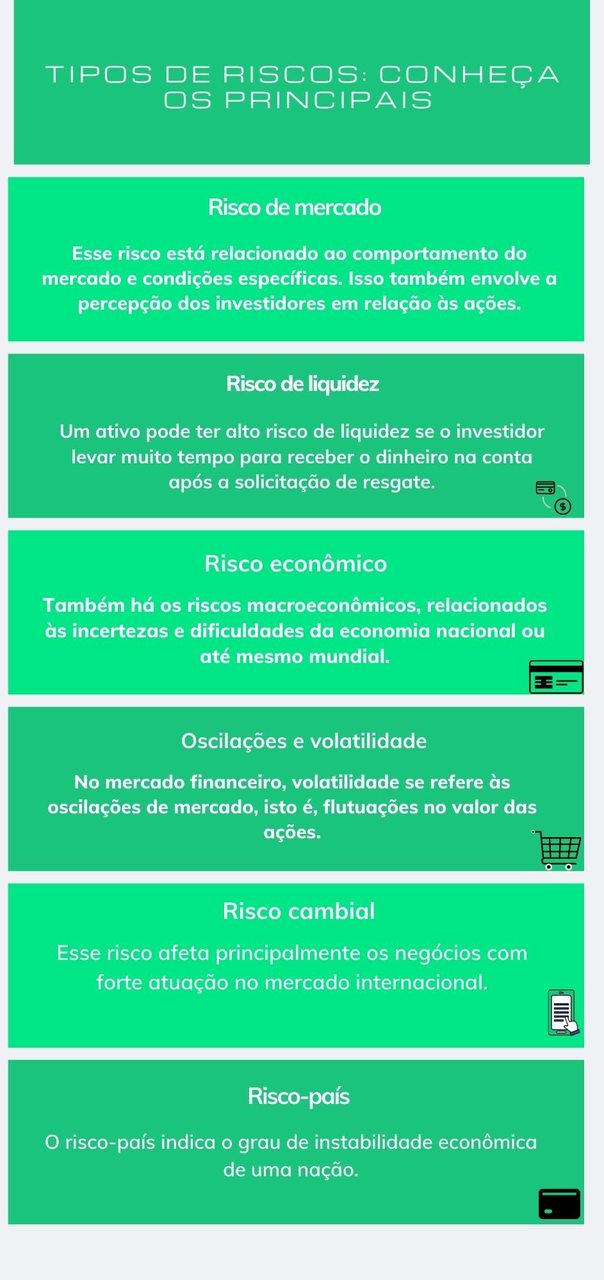
As in this case, the investment is focused on companies that are not yet listed on the stock exchange and are less consolidated, there is a risk of suffering from macroeconomic and sectoral issues.
There is also a liquidity risk. These are generally closed-end funds. Therefore, the invested capital can only be withdrawn after a previously stipulated period, which is usually medium or long term.
Therefore, it is essential that you know all the details of the fund before investing.
Conclusion
Now you know what Equity Investment Funds and Infrastructure FIPs are.
To find out if this investment is advantageous for you, the first step is to analyze your investor profile.
Furthermore, management is another essential point that must be checked when choosing a FIP. Finally, investors also need to know all the details of the fund before making any investment!