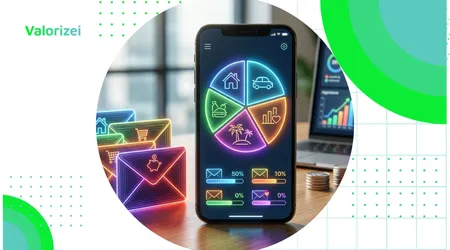
Financial education without the boring: How to learn about money in a fun way.

Find out how Learn about money in a fun way. It's the secret to transforming your financial health without sacrificing your peace of mind.
Announcements
Most people shy away from the topic of finance because they immediately associate it with complex spreadsheets, severe restrictions, and incomprehensible banking terms.
However, modern financial education has evolved significantly, integrating technology, behavioral psychology, and entertainment to facilitate the absorption of vital concepts.
Today, it is possible to master resource management through games, films, and playful activities that capture attention.
In this article, we will explore innovative methods that eliminate the boredom of financial learning, allowing you to take control of your economic life.
Get ready to see your budget from a new perspective, where knowledge generates freedom, not anxiety.
Summary
- Why does traditional financial education often fail?
- What is gamification and how can it revolutionize your finances?
- Which movies and TV series teach real lessons about money?
- How do current video games simulate the real economy?
- Comparative Table: Traditional Method vs. Playful Method
- Which podcasts transform "economics jargon" into fluent conversation?
- Conclusion
- Frequently Asked Questions (FAQ)
Why does traditional financial education often fail most people?
The classic model of financial education fails because it ignores the basic workings of the human brain, focusing only on cold numbers and pure mathematical logic.
Announcements
Our cognitive system tends to reject information that causes immediate stress or that seems disconnected from our emotional and daily reality.
When an expert presents complex graphs without human context, the layperson's brain enters a state of cognitive overload, blocking effective learning.
Traditional education often instills a sense of guilt about spending, which generates an aversion to the topic.
Conversely, when searching Learn about money in a fun way.We activate the brain's reward system, releasing dopamine during the process.
This approach makes learning concepts like compound interest and investments enjoyable and, above all, memorable.
What is financial gamification and how does it help with learning?
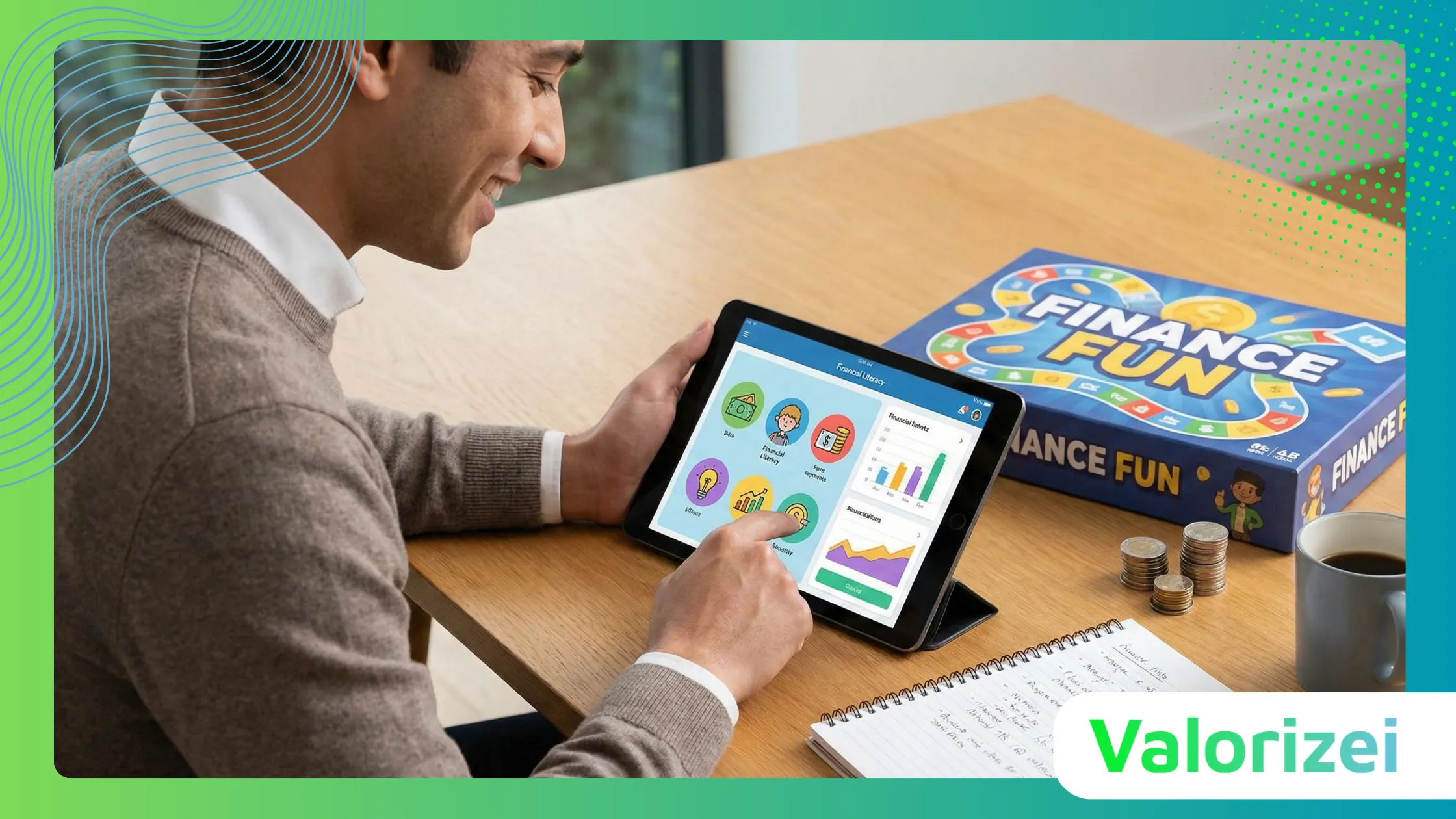
Gamification involves applying game design elements to non-game contexts, such as managing a household budget.
This strategy uses progress bars, achievements, levels, and virtual rewards to encourage positive and consistent financial behaviors.
Modern finance apps have transformed daily saving into a mission, where saving money unlocks badges or builds virtual cities.
This playful visualization of progress helps the user stay focused on long-term goals without feeling the burden of sacrifice.
Studies in behavioral economics indicate that receiving an immediate reward, even a symbolic one, reinforces the habit of saving more than the promise of future profit.
Therefore, turning saving into a "game" positively tricks the brain, creating a healthy routine of capital accumulation.
To understand more about how the brain processes rewards and games, you can consult studies on applied behavioral psychology, which explain the science behind play motivation.
+ Early Christmas shopping: why "buying early" can save you money.
Which films and series teach valuable and real-world lessons about economics?
Film and streaming are powerful tools for illustrating complex economic concepts through engaging narratives and relatable characters.
Films like The Big Short (The Big ShortThey explain the 2008 crisis and the securities market using visually creative and accessible language.
Watching documentaries or fictional works based on true stories allows one to visualize the consequences of poor financial decisions without having to experience them firsthand.
Series that address the rise and fall of corporate empires teach about risk management, business ethics, and market volatility.
By analyzing the characters' behavior, the viewer develops a critical understanding of consumerism, leverage, and mass psychology.
This is a passive, yet extremely effective way to absorb financial vocabulary and understand the global dynamics of money.
+ Savings Challenges: How to Save R$5,000 in a Year
How do current video games simulate real-life resource management?
Many popular games, which at first glance seem like mere entertainment, have robust internal economies that perfectly simulate the real market.
Life simulation or city-building games require the player to manage budgets, pay taxes, and invest in infrastructure to thrive.
In titles such as Animal Crossing or The SimsThe player quickly learns that spending all their earnings hinders progress in the game.
The need to pay off virtual loans or save up to buy rare items teaches the concept of opportunity cost in a practical way.
Massively multiplayer online role-playing games (MMORPGs) feature fluctuating markets where supply and demand dictate item prices, teaching commerce and negotiation.
These virtual experiences create a solid foundation of logical reasoning that can be directly applied to organizing personal finances.
Comparison: Traditional Approach vs. Playful Approach
Below, we present comparative data on the effectiveness and engagement of teaching methods, based on adult learning trends in 2025.
| Analysis Criteria | Traditional Financial Education | Fun Financial Education |
| Main Focus | Theory, Mathematics, and Spreadsheets | Behavior, Games, and Narratives |
| Content Retention | Low (approx. 10% after 3 months) | High (approx. 65% after 3 months) |
| Entry Barrier | High (requires prior knowledge) | Low (intuitive and accessible) |
| Motivational Factor | Fear of scarcity or debt | Visual reward and progression |
| Sustainability | Difficult to maintain in the long term. | It creates automatic and lasting habits. |
Which podcasts and audio channels transform "economics jargon" into fluent conversation?
The audio revolution has allowed financial experts to become part of people's daily lives while they're commuting or at the gym, making money management easier.
Modern podcasts adopt a conversational tone, like between friends, eliminating the rigid formality of traditional economic news broadcasts.
The format of storytelling (storytelling) used in these programs connects economic data to real stories of financial success or failure.
Hearing about other people's journeys fosters empathy and offers practical examples of what to do (and what not to do) with your assets.
Furthermore, the diversity of voices in today's market ensures that you can find an influencer who speaks your language and understands your reality.
Whether focused on investments for beginners, debt relief, or entrepreneurship, audio is a powerful and flexible immersion tool.
Conclusion
The era of staid and inaccessible information is over; today, Learn about money in a fun way. It's the smartest strategy to guarantee stability.
By integrating games, movies, and a lighthearted mindset into your learning, you remove fear and replace it with curiosity.
Remember that money is just a tool to build the life you want, and mastering it doesn't have to be a burden.
Start by replacing that boring spreadsheet with a gamified app, or swap the dense news for an intelligent film about the market.
Consistency in financial studies comes from the pleasure you find in the process of discovery and in visualizing your dreams coming true.
To deepen your knowledge with official data and stay safe, always consult reliable sources such as the financial education portal of [website name]. Central Bank of Brazil.
Frequently Asked Questions (FAQ)
What exactly does gamifying my personal finances mean?
Gamification means applying game mechanics, such as scores, levels, and rewards, to managing your money. The goal is to make saving and budgeting a stimulating and competitive activity.
Is it possible to learn how to invest just by watching movies?
Movies are excellent for understanding general concepts, market psychology, and economic history, but they don't replace technical study. They work best as a gateway to spark interest and facilitate later understanding of technical terms.
Do video games really teach useful skills for adult life?
Yes, many games require managing limited resources, long-term strategic planning, and making decisions under pressure. These are essential "soft skills" for anyone who wants to manage their salary well and make informed investments.
What's the best way to start studying finance without getting bored?
Start by consuming content that aligns with your hobbies, such as humorous YouTube channels about finance or narrative podcasts. Avoid trying to read dense technical books right away; opt for investor biographies or books with accessible language.
Does playful financial education work for children and teenagers?
Absolutely; in fact, it's the most effective method for these age groups, as it introduces complex concepts in a natural way. Board games and educational apps create a solid foundation of the value of money even before adult life begins.