Attention economy: digital platforms are changing consumption.
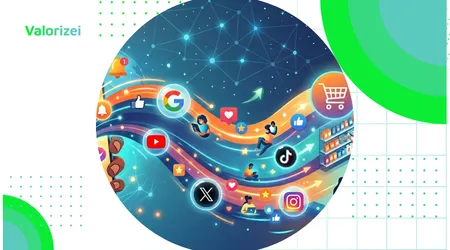
A attention economy It became the central pillar of market strategies in 2026, redefining how companies and consumers interact in the hyper-connected and competitive digital environment.
Announcements
In this scenario of information overload, the competition for every second of the user's attention has transformed time into the most valuable and scarce commodity in our current contemporary society.
This article explores the dynamics of this new economic order, analyzing the behavioral impacts, retention technologies, and profound changes in the business models of large global platforms.
Summary
- What is the attention economy and what is its current impact?
- How do algorithms shape consumer behavior?
- What are the main business models in 2026?
- Table: Comparison of Retention and Engagement
- How can we protect digital well-being in a world of stimuli?
- Conclusion
- FAQ – Frequently Asked Questions
What is the attention economy and what is its current impact?
The concept, originally coined by psychologist Herbert Simon, takes on dramatic proportions today. By 2026, the supply of digital content will dramatically exceed our biological capacity to process simultaneous stimuli.
As plataformas deixaram de vender apenas produtos para negociar a disponibilidade mental de seus usuários.
Esse movimento gerou uma infraestrutura tecnológica voltada exclusivamente para a captura de engajamento constante e duradouro.
A attention economy It dictates that if the service is free, the product being sold is its focus. This has radically altered advertising, which now uses micro-segmentation based on psychometric data.
Announcements
Empresas de todos os setores precisam entender que não competem mais apenas com seus pares diretos.
Elas lutam contra notificações de redes sociais, vídeos curtos e transmissões ao vivo que sequestram o tempo.
The fragmentation of attention has reduced the average human concentration span, forcing brands to create increasingly fast-paced, impactful, and visually stimulating messages to guarantee any level of real conversion.
How do algorithms shape consumer behavior?
Os sistemas de recomendação operam hoje com inteligência artificial generativa avançada, prevendo desejos antes mesmo que o consumidor os sinta.
Essa antecipação cria ciclos de consumo baseados em gratificação instantânea e impulsividade.
Ao analisar padrões de rolagem e tempo de permanência, os algoritmos personalizam o feed para manter o usuário em estado de fluxo.
Essa técnica maximiza a exposição a anúncios integrados de forma orgânica.
The modern consumer rarely actively seeks out a product; they are found by the ideal offer at their most vulnerable or needy moment, generating a psychological dependence on digital interfaces.
This extreme personalization, however, creates information bubbles. Within the attention economyThe algorithm prioritizes what generates an emotional reaction, often at the expense of the quality or accuracy of the information consumed daily.
What are the main business models in 2026?
Monetization has evolved from simple banner advertising to complex systems of social commerce e assinaturas de acesso premium.
O objetivo é reduzir o atrito entre a descoberta e a transação financeira final.
As plataformas de vídeos curtos dominam o mercado, integrando ferramentas de compra direta dentro do próprio player.
Isso permite que o ciclo de atenção seja convertido em lucro em poucos segundos de interação.
O modelo de “assinatura de atenção” também cresceu, onde usuários pagam para não serem interrompidos.
Essa inversão mostra que o silêncio e o foco tornaram-se artigos de luxo acessíveis apenas para alguns.
++ New economic geography: regions that will grow the most in 2026
Table: Comparison of Retention and Engagement
Below, we present consolidated data on the behavior of the average user across different platform formats during the first quarter of 2026, reflecting the efficiency of interest capture.
++ Rental economics: growth of rentals in Brazil in 2026
| Platform Type | Average Daily Time | Conversion Rate | Main Trigger |
| Short Videos (Social) | 95 minutes | 4.2% | Dopamine / Infinite Loop |
| Video Streaming | 120 minutes | 1.5% | Storytelling / Immersion |
| Mobile Games (Freemium) | 60 minutes | 5.8% | Reward / Gamification |
| Newsletters and Text | 15 minutes | 2.1% | Authority / Curatorship |
How can we protect digital well-being in a world of stimuli?
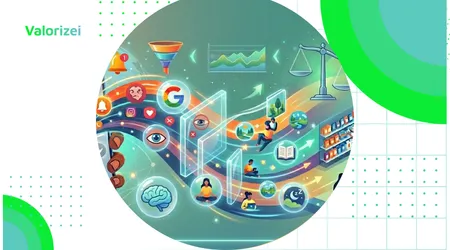
The growth of attention economy It has brought about urgent debates about mental health and cognitive sovereignty.
Governments in 2026 will already be implementing regulations that limit the use of persuasive design techniques, such as... infinite scroll.
The "Digital Minimalism" movement is gaining momentum, encouraging the conscious use of technological tools.
Consumers are learning to audit their time and disable notifications that don't add real value to their lives.
Educators and psychologists advocate for digital literacy as an essential discipline. Understanding how algorithms operate is the first step in regaining control over one's own choices and avoiding commercial manipulation.
Companies that adopt an ethical stance, respecting the customer's time, begin to gain a competitive advantage.
"Respect Marketing" emerges as a sustainable alternative to the aggressive exploitation of others' attention.
In the long run, the success of brands will depend on building relationships of trust, not just accidental clicks. The quality of the interaction will become more important than the quantity of impressions.
The future of advertising demands complete transparency. The consumer of 2026 values brands that facilitate their journey, rather than creating digital labyrinths designed to prevent them from closing the app or website.
++ New consumer class: changes in Brazilian consumption in 2026
Conclusion
Navigate through attention economy exige um equilíbrio delicado entre aproveitar as facilidades tecnológicas e preservar a autonomia individual.
As plataformas digitais mudaram definitivamente nossa forma de consumir e processar o mundo.
For companies, the challenge is to be relevant without being intrusive. For users, the challenge is to be conscious without isolating themselves. The currency of the 21st century is too precious to be spent recklessly.
Keeping up with these transformations is vital for any modern economic strategy. To deepen your knowledge of market and technology trends, visit the portal of... World Economic Forum for detailed global analyses.
FAQ – Frequently Asked Questions
What defines the attention economy?
This approach treats human attention as a scarce and valuable resource, where companies apply persuasive design and algorithms to maximize users' screen time.
How does the attention economy affect the consumer's wallet?
It encourages impulse buying through extreme personalization, making ads almost indistinguishable from organic content, which can lead to unplanned spending and increased debt.
Is it possible to escape retention algorithms?
Although difficult, it is possible to mitigate its effects through the use of time management tools, disabling non-essential notifications, and practicing scheduled periods of digital disconnection.
What role will AI play in the attention economy in 2026?
AI plays a role in creating highly specific content and in predictive behavior analysis, allowing platforms to deliver exactly what the user wants to see in real time.