
ChatGPT for studying: 10 commands that make your life easier
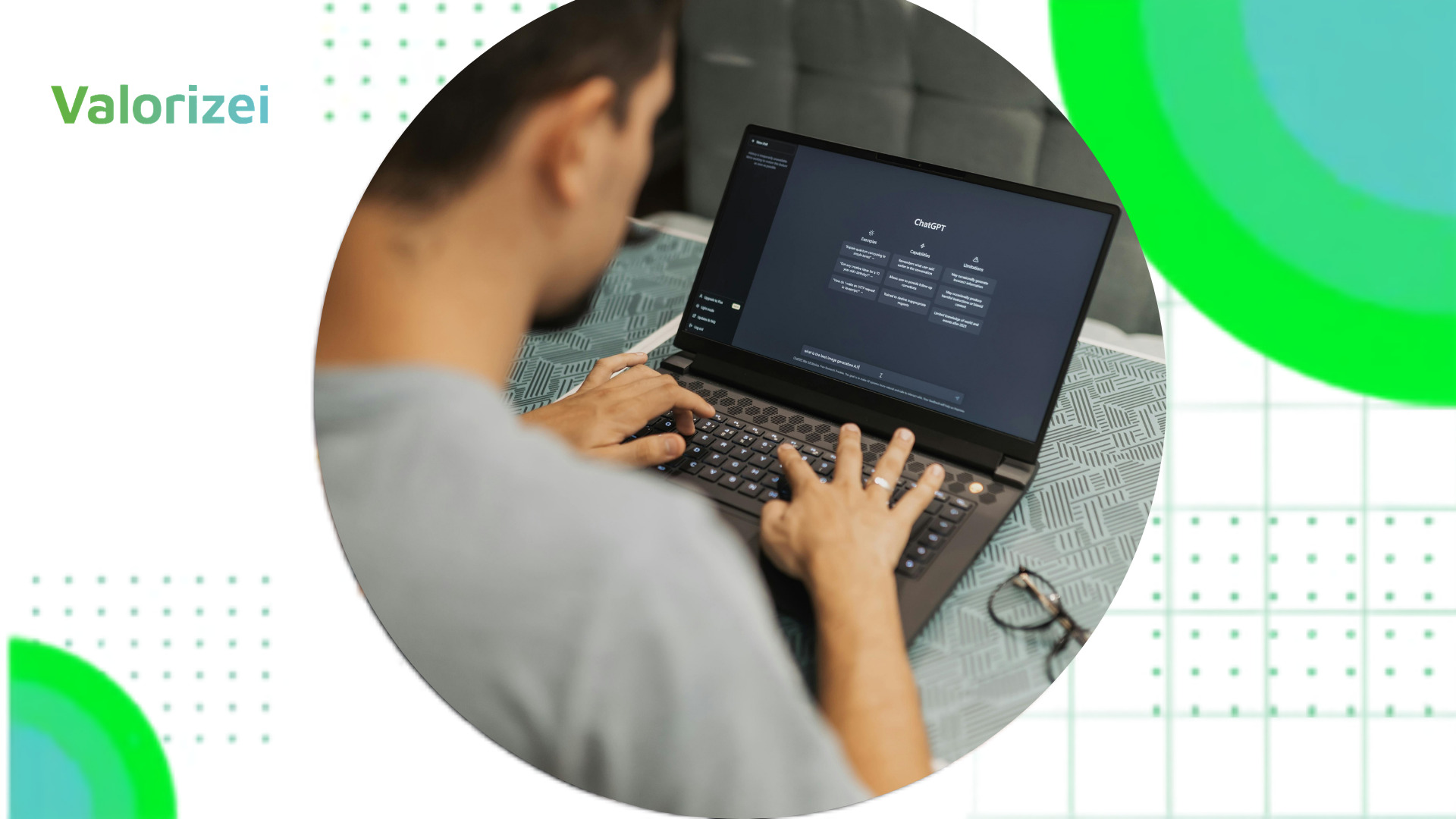
Use the ChatGPT for studying It has become a major game-changer in preparing for college entrance exams and competitive exams, but few people explore the tool with the necessary depth.
Announcements
Artificial intelligence should not be seen as a factory of ready-made answers, but rather as a changeable personal tutor, ready to test your reasoning at any time.
To unlock the model's true potential, the secret is not to ask generic questions, but to structure commands that force the machine to think and organize knowledge along with you.
Summary
- How does ChatGPT transform your study routine?
- What are the 10 commands that make your academic life easier?
- How effective is the use of AI in content retention?
- How to avoid hallucinations and study safely online?
- Frequently Asked Questions (FAQ)
How does ChatGPT transform your study routine?
The practical application of ChatGPT for studying It allows you to implement active recovery without wasting precious hours formatting notebooks or creating summaries from scratch.
The algorithm swallows absurd volumes of dense literature, identifies the core of the discussions, and generates simulations tailored precisely to their biggest theoretical gaps.
The direct impact of this is the reduction of cognitive load: you spend less energy organizing your routine and can focus your brain where it matters, which is absorbing the information.
What are the 10 commands that make your academic life easier?
1. Explaining complex concepts using the Feynman Technique
- Command:“"Act like an expert teacher. Explain the concept of [insert topic] as if I were 12 years old, using simple analogies and everyday examples."”
- Application: There is something liberating about disarming the pedantic tone of physics or legal theories by using direct analogies in your first encounter with the subject.
2. Create review quizzes with answer keys and explanations.
- Command:“Create a practice test with 5 multiple-choice questions on [insert topic]. Provide the answers at the end with detailed explanations for each option.”
- Application: This mechanism of successive tests with the ChatGPT for studying It forces the brain to retrieve the content and consolidates long-term memory.
3. Summarizing long articles and academic books.
- Command:“Summarize the central points of the following text into bullet points, highlighting the main theses, the author's arguments, and conclusions: [paste text]."”
- Application: It reduces the mountain of bibliography to a functional map, allowing one to move directly to critical analysis instead of getting bogged down by the sheer volume of pages.
4. Generate personalized study schedules
- Command:“Create a weekly study plan for [exam], allowing for 2 hours of availability per day. Prioritize the subjects [list of subjects] and include review sessions.”
- Application: The key here is to take management out of the abstract realm and break down ambitious goals into achievable daily tasks that fit into your actual routine.
5. Simulate conversation in foreign languages.
- Command:“"Act like a native speaker of [language]. Have an informal conversation with me about [topic], correcting my grammatical errors and suggesting natural vocabulary."”
- Application: It functions as a safe laboratory for making pronunciation and syntax mistakes, without the embarrassment or high fees of in-person tutoring courses.
6. Transforming raw notes into flashcards
- Command:“"Convert these lecture notes on [topic] into a question-and-answer format for creating flashcards in Anki: [paste notes]."”
- Application: It automates the manual work of typing, allowing you to export ready-made interval review structures directly to your favorite application.
7. Finding flaws in the argumentation of essays.
- Command:“"Analyze the text below based on the ENEM evaluation criteria. Point out flaws in cohesion, problems with logic, and suggest improvements: [paste text]."”
- Application: It functions as a preliminary screening, exposing holes in your thesis and disjointed passages before you submit the text to the official panel.
8. Explain problem-solving step by step.
- Command:“Solve the following problem in [subject/area]: [insert problem]. Explain in detail the reasoning applied in each step of the calculation or demonstration.”
- Application: Disassemble the black box of exact sciences by using the ChatGPT for studying, revealing the logic behind each formula instead of simply presenting the clean result.
9. Create mind maps in text format.
- Command:“"Develop a visual hierarchy in the form of topics and subtopics on [topic] so that I can draw a complete mind map."”
- Application: It organizes the architecture of ideas, clearly showing the web of relationships between central concepts and the secondary ramifications of the subject matter.
10. Rewrite texts to make them more academic.
- Command:“Rewrite the following paragraph using formal academic language, maintaining the original meaning and improving thematic clarity: [paste paragraph]”
- Application: It increases the vocabulary precision of your writing, eliminates verbal language flaws, and enhances the technical rigor of your academic work.
How can I integrate ChatGPT into my study habits without losing discipline?
Integrating technology into your daily routine requires clear boundaries so that the system doesn't become a crutch or a constant source of digital distraction.
The secret lies in defining specific moments to activate the artificial intelligence, using the tool exclusively after your first individual effort to understand the subject matter.
By treating this innovation as a complementary resource for checking and deepening your understanding, you maintain focus on active learning and build a solid, autonomous routine.
This approach prevents over-reliance and ensures that your mind continues to exercise critical thinking at every stage of the process.
Thus, digital resources work in favor of your development, accelerating your results without compromising the quality of your theoretical understanding.
Furthermore, establishing fixed time blocks for consultations prevents browsing from turning into procrastination disguised as productivity.
++ The 3-7-30 Technique: A modern way to study and review difficult material.
How effective is the use of AI in content retention?
The science of learning is often unforgiving: passively consuming information generates a false sense of mastery that crumbles when the test is taken.
The following table clearly shows how the integration of well-designed prompts changes the level of theoretical retention in daily study.
| Study Methodology | Estimated Average Retention | The Role of ChatGPT in Practice |
| Passive Reading | 10% to 20% | Transforming text into dynamic summaries |
| Active Recovery | 50% to 70% | Automatic generation of tests and simulations. |
| Spaced Practice | 75% to 85% | Automated scheduling |
| Feynman Technique | 80% to 90% | Validation of simplified explanations |
Upon rescuing the ChatGPT for studying As a partner in the debate, you cease to be a mere spectator of the matter and take control of your own evolution.
It's worth following analyses on pedagogical methodologies and digital innovations directly on the page of Ministry of Education to understand the country's situation.
What metrics track the evolution of your learning when using AI?
Monitoring your actual progress requires objective metrics to ensure that the use of these digital tools is yielding concrete performance gains.
Instead of just counting the hours spent in front of the screen, evaluate your percentage of correct answers on practice tests and how quickly you can explain a complex topic without consulting your notes.
Another key indicator is the spaced review error rate, which shows whether the content was retained in long-term memory or remained restricted to immediate comprehension.
When these numbers are tracked weekly, it becomes easy to identify which subjects require more individual effort and which have already been successfully consolidated.
This cold, hard analysis of the data prevents the illusion of productivity and directs your energy to where it yields the greatest academic return.
Adjusting your strategy based on evidence transforms the habit of studying into a predictable, efficient, and constantly improving process.
++ Reverse study: how to learn by solving problems first
What is the correct way to combine manual summaries and AI responses?

The ideal strategy consists of using technology to synthesize the initial theory and reserving manual record-keeping exclusively for the final consolidation stage.
Writing by hand forces the brain to slow down, select the most relevant ideas, and restructure the information from a strictly personal perspective.
When you receive a condensed structure from the platform and rewrite it in your own words, the fixation process becomes infinitely more robust and lasting.
This dual-layer processing prevents learning from becoming superficial, ensuring that knowledge is actively integrated into your repertoire.
The balance between the speed of digital processing and the tactile effort of handwriting creates the perfect environment for theoretical retention.
Ultimately, technology provides the quick foundation, but it's your manual work that builds long-term memory.
How can I customize the machine's responses to suit my learning style?
Adjusting the settings and approach of the prompts allows the system to deliver explanations tailored to your cognitive preferences.
If you learn best with visual aids, you can ask them to organize the concepts into hierarchical topics, comparative tables, or mind map structures.
If your profile is analytical, it's worth asking that the explanation prioritize cause-and-effect logic, detailing the underlying principles of each formula or theory presented.
Stating your current level of knowledge before asking a question avoids generic answers and ensures a level of depth appropriate to the situation.
This continuous adaptation transforms the virtual environment into an extension of your thinking, respecting your individual pace of absorption.
Mastering this customization is what differentiates amateur use of the tool from high-performance academic preparation.
++ Hybrid studies in 2026: how to balance online classes, in-person classes, and self-learning.
How to avoid hallucinations and study safely online?
Language models are experts at appearing convincing, which hides a real risk: the ability to invent facts and quotes with absolute naturalness.
The attentive student never accepts dates, legal rulings, or complex equations without verifying the primary sources before stamping the learning as definitive.
Use the ChatGPT for studying as an architect of ideas and structurer of logic, preserving his critical perspective as the final and non-negotiable filter of the process.
The true competitive advantage arises from this balance between the processing speed of the machine and the analytical rigor that only the human mind can apply.
To understand the ethical considerations and global recommendations regarding technology in learning, it's worth checking out the education reports from... UNESCO.
Frequently Asked Questions (FAQ)
Does ChatGPT replace reading academic books?
No. The tool acts as an excellent synthesizer of concepts, but the theoretical depth of the original authors remains irreplaceable.
How can I ensure that ChatGPT responses are correct?
Place the source text within the conversation itself and instruct the AI to limit its responses strictly to the facts contained in that document.
Is it permissible to use AI to do college work?
Using the system to research and organize ideas is legitimate, but pasting automatically generated paragraphs violates academic integrity guidelines.