
Digital wallets dominate The national financial landscape is being disrupted, triggering one of those phenomena that change the face of the country long before legislation can keep up.
Announcements
The gesture of opening one's wallet and pulling out a banknote has become almost anachronistic.
Today, Brazilians get things done with their cell phones at the ready, whether pointing them at a QR code on a bakery screen or holding the device up to the card reader on the bus.
Physical money isn't disappearing by decree; it's being swallowed up by convenience.
In this article, we go far beyond the obvious practicality of Pix. We will analyze the mechanics behind the disappearance of banknotes, the real impact on small businesses, the weight of official data, and, of course, the new and sophisticated headaches that arise when your entire net worth fits in your pants pocket.
What you will read in this article:
- The silent decline of paper money in street commerce.
- The psychological and technical triggers that explain why digital wallets won.
- An X-ray of the Central Bank's official data.
- The new dynamics of security: the end of ATM robberies, the beginning of invisible scams.
- What is still needed for the complete digitalization of the country's interior?
How have Pix and the ease of access to information have changed the behavior of Brazilian consumers?
The classic scene of a citizen standing in line at an ATM on a Sunday night has become almost a memory of the 90s.
There is something very symbolic about this transition: Pix was not just a technical innovation, but a kind of social buffer that included millions of people in the financial market without them needing to set foot in a traditional bank branch.
NFC technology, which allows you to pay by proximity using your phone or watch, has put an end to the paranoia of forgetting your plastic card at home.
Ultimately, businesses realized that the payment barrier needed to be as low as possible. If the customer has to think twice or wait for change, the sale cools down.
This is reflected in street markets, street vendors, and even traffic lights in major cities. Signs displaying Pix payment methods or wireless payment terminals have become tools for survival.
Given this speed, it becomes clear that the Digital wallets dominate The routine, for a simple reason: they eliminated the friction of consumption.
What is the real data that proves the decline in cash transactions?
One only needs to look at the Central Bank's monetary circulation reports to notice that the volume of paper money issued has been shrinking in an unprecedented way.
This is not a seasonal fluctuation, but a deliberate choice by the public, who prefer the abstract security of the digits on the screen to the materiality of the banknote in their hand.
The speed of this replacement impresses even the most skeptical analysts.
Free digital accounts have broken down the bureaucratic walls of large banks and created a mass of consumers who have never written a check or even know what a two-hundred-real note looks like.
+ Easy credit via apps: increased debt.
| Payment Method | Growth in Transaction Volume (Base Year) | Consumer Preference (%) |
| Pix / Digital Wallets | + 42% | 78% |
| Credit/Debit Card | + 12% | 16% |
| Physical Money | – 28% | 6% |
Why do digital wallets dominate in preference compared to physical cards?
Centralizing cards from different brands and banks in a single app solved a practical space problem and a chronic security annoyance.
Looking closely, there's a detail that's often misunderstood: the plastic card is much more vulnerable to prying eyes and physical cloning than the encrypted environment of a smartphone.
Facial recognition and biometric reading systems have transformed the act of paying into something highly personal.
If someone steals your magnetic stripe card, the damage can be immediate; if they take your cell phone, there are software barriers that give you time to react.
Furthermore, the aggressive loyalty strategy of these platforms, which distribute cashback and personalized benefits according to usage profiles, has created a cycle of mutual dependence.
That's why the Digital wallets dominate The current ecosystem: they have transformed payment, which has always been a painful part of the purchase, into an almost interactive and advantageous experience.
+ Income Tax 2026: Who is required to file?
What are the impacts of this digital migration on public and private security?
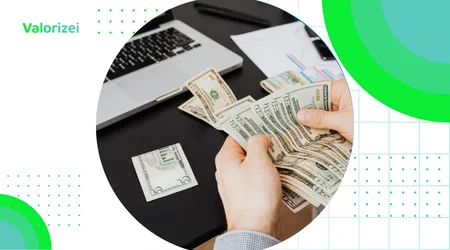
There is a striking shift in the dynamics of urban crime that few people directly associate with the digitalization of money.
The image of robberies targeting bus fare collectors or small neighborhood businesses has faded, simply because these companies' safes are now digital and stored in the cloud. Less cash in circulation means less fuel for opportunistic crime.
The counterpart, however, is worrying. Crime has not disappeared; it has migrated to social engineering vulnerabilities and express kidnappings focused on immediate transfers.
Vulnerability is now both psychological and digital, requiring financial institutions to engage in an arms race in terms of artificial intelligence for protection.
Solutions such as geographic restrictions, drastic limits on nighttime transactions, and automatic account blocking in case of atypical activity attempt to protect the user.
The biggest challenge today is no longer protecting the leather wallet in the back pocket, but rather ensuring that access to the bank does not become a weapon against the account holder.
Where is cash still used, and what are the challenges of full digitalization?
There is a deep Brazil where reality is shaped by the lack of cell phone signal and the chronic instability of broadband internet.
In these regional pockets, far from the hyper-connected environment of the capital cities, the crumpled paper bill still dictates the rhythm of daily commercial transactions because technology simply cannot guarantee signal stability when making a purchase.
Another point that requires closer attention and less naiveté is the digital exclusion of the older population or those with low levels of formal education.
The complex nature of apps, constant updates, and English terminology create invisible barriers, isolating a segment of society that feels safer handling physical money.
Discussions surrounding Drex, the country's structural digital currency, attempt to design an infrastructure capable of unifying these loose ends.
When this system is mature, the scenario where the Digital wallets dominate It will cease to be an urban consumption trend and become the backbone of the entire national economy.
What are the best practices for protecting your money in financial apps?
The golden rule of modern security is to understand that the weakest link is almost always user behavior, not the bank's encryption.
Enabling two-step verification using independent channels is essential to prevent access from being easily compromised if the phone chip is lost.
Be extremely suspicious of alarming notifications, links received through messaging apps, or calls from supposed managers demanding emergency procedures.
Social engineering is so sophisticated that criminals can perfectly replicate the visual identity and tone of voice of official call centers.
It's worth spending ten minutes setting low limits for current transactions and creating very restricted usage profiles for the times you're out and about.
The idea is to create layers of difficulty: the more barriers the fraudster encounters, the more time you will have to remotely block the accounts.
Closing
The transition to invisible money is a cultural process that says a lot about the pragmatism of Brazilians when faced with technological innovations that make life easier.
Paper money has become a transitional object, a contingency tool for when the battery runs out or the communication system temporarily fails.
The real discussion now is not whether physical money will disappear, but rather how to ensure that this new intangible economy is inclusive, secure, and fair for all segments of the population.
Ignoring this dynamic is not an option for anyone who wants to manage finances with even a minimum of technical efficiency.
For those who wish to delve deeper into the regulatory landscape and understand the inner workings of this banking transition, it is worthwhile to follow the technical notes published by... Brazilian Federation of Banks (FEBRABAN)which detail the sector's investments in infrastructure and security.
FAQ – Frequently Asked Questions
Will physical money disappear completely in the coming years?
Not abruptly. Paper money fulfills a social function of storing value and providing accessibility in places without technological infrastructure, although its commercial circulation continues to fall drastically year after year.
Does centralizing cards in digital wallets generate additional costs for the average user?
The contactless storage and payment service offered by established platforms is free.
Extra costs usually only appear in bundled services, such as withdrawals at Banco24Horas ATMs or installment payments with interest.
What is the immediate procedure if your cell phone containing banking apps is stolen?
The absolute priority is to call the phone company to block the SIM card and then contact the banks to freeze the access credentials, preventing the attackers from receiving recovery codes via SMS.
Can the contactless payment system be accidentally activated in my pocket?
The range of NFC technology is extremely short, requiring extreme and intentional physical proximity to the payment terminal.
In addition, the devices require screen unlocking or biometric confirmation to validate most operations.