
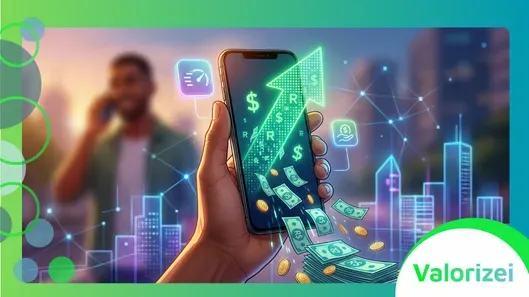
O Easy credit via apps It has ceased to be a technological convenience and has become an omnipresent — and dangerous — element of the Brazilian domestic economy by 2026.
Announcements
While digital banking has democratized access to capital, it has also created a kind of "financial casino" in the pocket of every citizen.
The ease with which a five-digit limit appears on the screen, without questions or guarantees, masks a cruel mathematical reality that many only realize when their balance goes into permanent red.
In this article, we delve into the inner workings behind the colorful interfaces of digital banks, exposing how urgency and persuasive design are reshaping indebtedness in Brazil.
Summary
- The illusion of immediate liquidity
- Where does the danger of quick clicks lie?
- Algorithms: the new bank managers
- Table: The true cost of digital money
- Defense strategies for your wallet.
- FAQ: Essential Questions
The evolution of fintechs and instant consumption.
The national banking landscape has changed aggressively in the last five years, consolidating the Easy credit via apps as a tool for survival, but also for motivation.
Traditional institutions, once slow, have been forced to mimic the agility of neobanks, which today use mountains of data to approve loans while the user waits for their coffee to cool.
The problem is that this friction removed from the process — the time spent going to the agency and reflecting — was, ironically, the consumer's greatest protection against impulsive decisions.
There's something unsettling about how these limits are presented: they don't seem like a debt, but rather a "bonus" available in the balance.
This semantic confusion leads many to ignore that the simplicity of the interface hides interest rates that transform small debts into financial abysses in just a few billing cycles.
What are the real risks of easy access to credit?
The most insidious danger lies in the psychological numbness caused by the digital environment, where the Easy credit via apps It visually blends in with the money you actually possess.
The most modern platforms not only offer the money; they "gamify" the use of the credit limit, distributing good payer badges or internal score increases for those who keep their revolving credit active.
It's a cycle of dependency where the user ends up taking out a new loan just to stop the bleeding of interest from the previous bill, without ever tackling the principal amount.
This total availability, operating 24 hours a day, eliminates the emotional cooling-off period necessary for high-value purchases.
Furthermore, transparency regarding the Total Effective Cost (TEC) is often hidden behind fine print or accordion-style menus that require multiple clicks to find.
In times of urgency, almost no one reads; the focus is solely on the amount of the installment that "seems" to fit within the month, ignoring the long-term impact on family assets.
How do algorithms influence indebtedness?
Artificial intelligence today does more than just risk analysis; it predicts the exact moment of your vulnerability to offer the Easy credit via apps.
If the system detects that your balance is below the historical average or that you have visited shopping websites, a push notification appears with an immediate and tempting solution.
These approaches are surgical and exploit scarcity triggers, suggesting that the price is an exclusive opportunity that will disappear in a few hours if not taken.
The ethical conflict here is evident: the algorithm is programmed to maximize the institution's return, not to ensure that the client maintains stable financial health.
Recent data suggests that current over-indebtedness is peaking among users with multiple digital accounts, as the sum of the credit limits offered ignores the actual ability to pay.
The lack of financial education specifically geared towards digital consumption leaves the average worker defenseless against marketing tactics that are veritable psychological traps.
The true cost of digital money in 2026
Understanding the numbers is the first step to regaining control. The table below reflects the market averages practiced by the main institutions that operate via mobile devices.
+ New INSS rules: what changes for retirees and pensioners?
| Credit Modality | Average Monthly Rate | Access Profile | Impact on the Budget |
| Personal Loan via App | 4.5% to 7.2% | No bureaucracy | High commitment |
| Credit Card (Revolving Credit) | 12.5% to 15% | One click | Extreme risk |
| Digital Payroll Loan | 1.8% to 2.5% | Sheet verification | Moderate/Safe |
| FGTS Advance | 2.1% to 3.9% | Guaranteed balance | Low immediate impact |
What are the main financial warning signs?
The recurring use of Easy credit via apps Having to cover basic expenses — such as groceries or utility bills — is the clearest symptom that something is very wrong.
When a credit limit starts to be viewed as part of monthly income, the consumer enters dangerous territory of financial denial.
Another red flag is the need to "roll over the debt," taking out microloans through different apps to avoid missing a larger payment, which destroys your credit score and peace of mind.
Technology should not replace the rigor of simple mathematics; noting each contract and its due dates is the only way to avoid being overwhelmed by automatic fines.
Often, the convenience of not receiving physical bills makes debts invisible until a court order to freeze or a negative credit report is filed.
Looking at your bank statement critically once a week helps to demystify the feeling that digital money is infinite or less "real" than paper money.
+ Income Tax 2026: Who is required to file?
How do regulations protect the consumer?
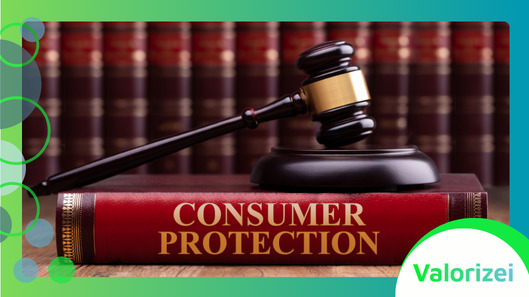
The Brazilian regulatory landscape has been attempting to keep pace with this speed, requiring that the Easy credit via apps Display information in a much more direct and visually honest way.
Currently, fintech companies are required to issue alerts when they identify typical over-indebtedness behaviors, suggesting pauses or free consultations before releasing new funds.
The Over-Indebtedness Law has become a powerful legal tool, allowing families to renegotiate their debts without compromising what legal experts call the "minimum subsistence level."
It is vital that citizens know they are not alone; channels like Consumidor.gov.br are fundamental for reporting abusive offers or lack of clarity in digital contracts.
Data protection has also evolved to prevent browsing history from being used to harass consumers during moments of emotional vulnerability, a practice that was common at the beginning of the decade.
Understanding these defense mechanisms is just as important as knowing how to use the bank's app itself.
+ Government economic measures: how recent decisions affect your wallet.
Defense strategies for your wallet.
The most effective measure is, paradoxically, to create friction: disable loan offer notifications so that the Easy credit via apps Stop jumping out at me.
Furthermore, building a small emergency fund, even with modest amounts, drastically reduces the need to resort to these expensive lines of credit in unforeseen circumstances.
The best defense against technological debt is an analytical and skeptical stance towards excessive conveniences that seem too good to be true.
What is the role of digital financial education?
Developing a critical perspective on consumption is the only real antidote to the promises of magical liquidity. Easy credit via apps.
It's not enough to know how to add and subtract; it's necessary to understand how the digital economy profits from our inattention and our desire for instant gratification.
Teaching new generations about the weight of compound interest and how credit algorithms work is an essential step towards a financially resilient society.
Today, there are several platforms and courses that translate "economics jargon" into accessible language, helping to decipher terms like SELIC and Total Effective Cost.
Technology should be used for control, not chaos; use management apps that consolidate your accounts and show the stark reality of your cash flow.
By taking control of the tools, the consumer ceases to be a passive target and begins to use the financial system to their advantage, guaranteeing stability and real freedom.
Final Reflection
The scenario for 2026 shows us that... Easy credit via apps It's a double-edged sword: it offers freedom of access, but demands the price of constant surveillance.
Digital agility cannot be an excuse for neglecting long-term planning, at the risk of mortgaging our future in exchange for fleeting conveniences. The balance between what the app allows and what our wallets can afford is the new frontier of financial maturity in contemporary Brazil.
To better understand your rights and how to navigate this market with legal security, consult the updated guidelines from [source/organization name]. Procon-SP.
FAQ – Frequently Asked Questions
1. Why are app fees usually higher?
Ease of access implies a greater risk for the institution, which passes on this operational and default cost to the final interest rate charged to the user.
2. Can I cancel a loan I took out through the app?
Yes, the Consumer Protection Code guarantees the right to withdraw from a purchase within 7 days for digital transactions, provided that the full amount is returned to the institution.
3. How does using multiple credit apps affect my credit score?
Frequent inquiries and the simultaneous opening of multiple lines of credit indicate financial instability to credit bureaus, which can lower your score and make it more difficult to obtain new financing.
4. What characterizes over-indebtedness in the digital environment?
This occurs when debt payments compromise income to such an extent that the individual can no longer pay for essential expenses such as food and housing without resorting to new loans.