
Is the Financial Letter covered by the FGC? Is it taxed? Find out!
Find out if the Financial Letter is covered by the FGC and how this investment works
Announcements
Is the Financial Letter covered by the FGC? This is one of the main questions for those interested in this application.
The Financial Letter (LF) is a medium and long-term fixed income investment – at least two years. In addition, it offers a more attractive return than other investments in this category.
And if you want to know more about this investment, keep reading! We will explain how LF works.

What is a Financial Letter?
The Financial Letter (LF) is a fixed income security whose remuneration rules are defined at the time of contracting.
In other words, when investing in this application, you already know which index is used for its yield.
The operation of LF is very similar to other fixed income products, such as Bank Deposit Certificate (CDB) and Agribusiness and Real Estate Credit Letters (LCA and LCI).
In practice, the investor is lending his resources to the bank or financial institution which, in return, offers a return as remuneration.
Regarding the term, it is usually at least two years. However, there are even longer terms.
Therefore, this type of application attracts the interest of investors focused on the medium and long term, as it offers low liquidity.
Is the Financial Letter covered by the FGC?
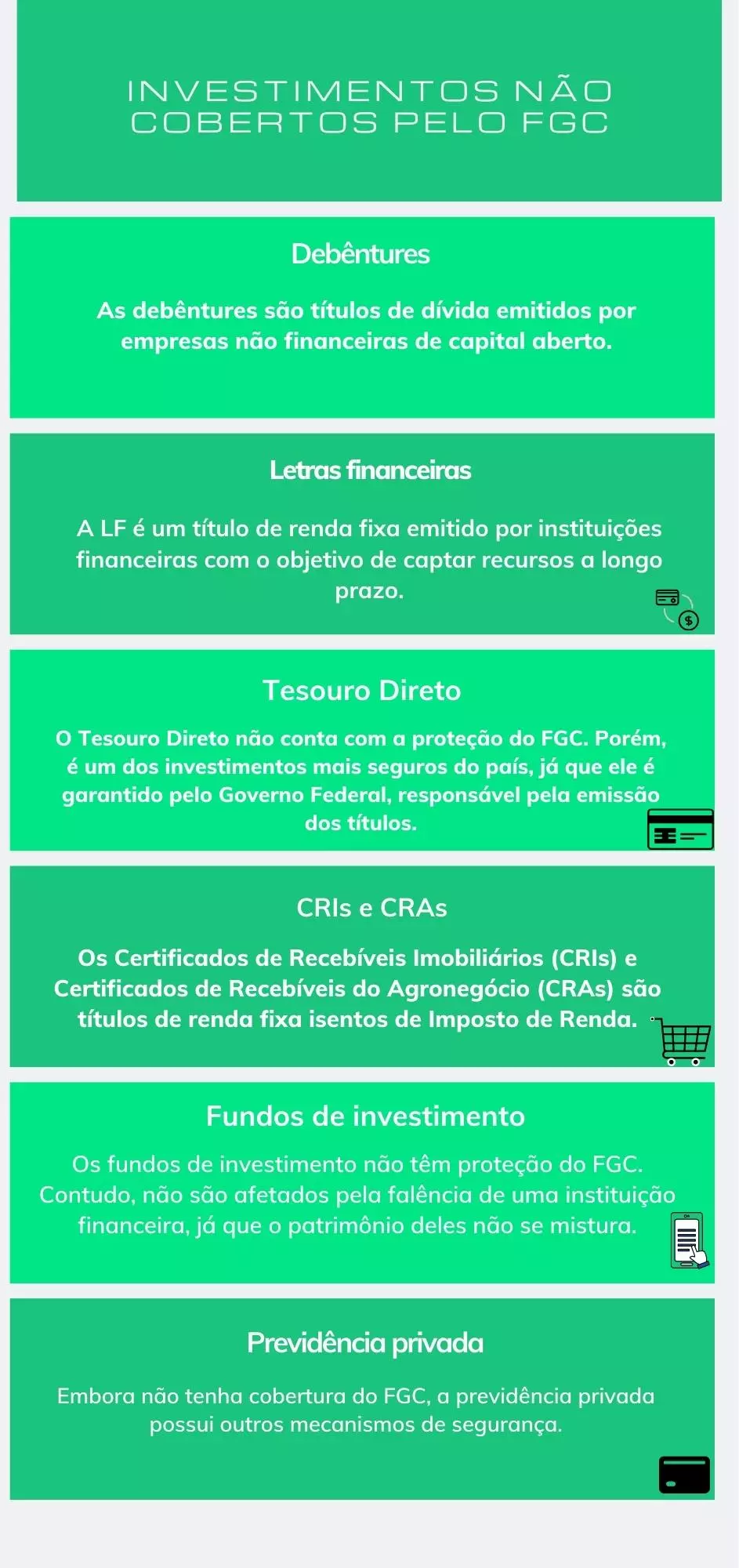
The Financial Letter is not covered by the Credit Guarantee Fund (FGC).
As LFs do not have this coverage, one of the biggest risks of this application is the possible bankruptcy of the issuing institution.
Therefore, when investing in a Financial Letter, it is essential to be sure that the institution responsible for issuing it has the necessary solidity and security.
The Credit Guarantee Fund (FGC) It is a private, non-profit entity whose main objective is to protect the capital and profitability of investors who invest in fixed income.
It helps minimize credit risk, protecting investors from the eventual bankruptcy of institutions.
What is the minimum amount to invest in Financial Letters?
The minimum investment amount is usually much higher than that required for other fixed income investments.
In accordance with the recommendations of the Brazilian Stock Exchange (B3), the LF cannot be issued with a unit nominal value of less than R$ 50 thousand in the form without a subordination clause.
For the option that includes the subordination cause, the minimum investment value is R$300,000.
How is a Financial Bill taxed?
The incidence of taxation for this financial product is the lowest possible for this class – 15%.
However, for you to make the comparison correctly, it is important to understand how taxation works on other investments.
In several fixed income investments, such as CDB, for example, Income Tax is charged.
Taxation varies according to the application period, as per the regressive table. See how it works:
| Term | Aliquot |
| From 0 to 180 days | 22,5% |
| From 181 to 360 days | 20% |
| From 361 to 720 days | 17,5% |
| Over 721 days | 15% |
Taxation of the Financial Bill follows the same table.
However, as you already know, the minimum investment period is two years. Therefore, the investor will not pay more than 15% in IR.
It is important to remember that taxation only applies to income, that is, not to the investment.
Remuneration structures of Financial Bills
There are several types of Financial Letters, which differ in terms of their remuneration structure.
Understand better how these investment alternatives work:
Prefixed
When the remuneration is fixed, the investor, at the time of contracting, already knows what the profitability will be.
Post-fixed
In post-fixed terms, even if you understand what the interest rates are, the returns can vary.
These securities are linked to floating indexes, such as the Interbank Deposit Certificate (CDI).
Mixed (hybrid)
Part of the remuneration is fixed at the time of application, while the other part is post-fixed, generally indexed to the IPCA.
How to invest in Financial Letters?
To invest in Financial Letters, you must open an account with an accredited brokerage firm.
Before investing in a LF or any other fixed income security, it is very important that you pay attention to some characteristics, such as:
• Investment term
• Remuneration format
• Minimum value
• Issuer details and payment terms
Furthermore, it is very important to know your investor profile and set financial goals.
What are the advantages of investing in Financial Letters?
See some benefits of investing in this application:
Profitability
The profitability of Financial Bills is usually more attractive than that offered by other fixed income investments.
The minimum investment is high and the money needs to be kept in the investment for at least two years. This is one of the reasons why the return is generally higher.
Diversification
Diversification is very important for any investor.
After all, this allows you to find new opportunities, as well as helping to dilute the risks involved.
LFs are not protected by the FGC. Furthermore, they have moderate credit risk.
However, by investing in financial notes from solid and renowned institutions, it is possible to considerably reduce credit risk.
In addition to the higher profitability than other fixed income securities and the possibility of diversification, there are other advantages to investing in Financial Bills, such as:
• Ease of application
• Lowest Income Tax rate (15%)
What are the disadvantages of Financial Letters?
The minimum amount to invest in a LF is R$50,000, much higher than that required for other fixed income securities.
Furthermore, it is also important to mention the incidence of IR and the impossibility of redemption before the deadline.
Conclusion
The Financial Letter is not covered by the FGC.
In fact, as this is a medium and long-term investment method, before making the investment, it is necessary to set objectives and carry out planning.
This way, you can be more certain that you won't need the funds in the short term (before the due date).