
What types of investments are there? See your options!
Find out what the main types of investments are and how to get started!
Announcements
There are various types of investment that can boost your assets and provide more financial security in the medium and long term.
Currently, leaving your money in a savings account is not the most advantageous option, as this investment tends to offer low returns.
And if you're looking for other investment alternatives, be sure to read this article!
Read on to find out more.

What are financial investments?
Financial investments are asset purchases and sales.
The goal of those who invest is to increase their assets, maintain their market share and, of course, generate a profit on their investment.
This makes it possible to achieve financial goals, more security and peace of mind.
In other words, we can say that those who invest want "money to make more money".
What types of investments are there?
There are various types of financial applications available on the market.
However, we can't say which is the best option, as it all depends on your investor profile, financial objectives, investment liquidity, current financial reality, among others.
That's why, before deciding on a particular type of investment, it's best to make a plan so that you know exactly what you want to achieve with your investments and how much you can afford to invest.
Now that you know that, let's take a look at the main types of financial investments:
Fixed income
Fixed income is the main gateway to the world of investments.
After all, it offers more predictability and security, which is ideal for those starting out in the market.
Fixed-income securities are divided into public and private bonds. Public bonds are considered extremely safe options, as they are guaranteed by the National Treasury.
Most private bonds, on the other hand, are also considered safe, as they are protected by the Credit Guarantee Fund (FGC).
There are different types of fixed-income investments, which can be classified according to profitability (prefixed, post-fixed or hybrid).
Below are the best-known fixed-income investments:
- Direct Treasury Bonds
- LCI (Real Estate Credit Bill) and LCA (Agribusiness Credit Bill)
- (CRI) Certificate of Real Estate Receivables and (CRA) Certificate of Agribusiness Receivables
- CDB (Bank Deposit Certificate)
- Bills of exchange
- Debentures
It's important to note that fixed-income investments differ in terms of liquidity, rate of return, minimum investment amount, etc.
Who should invest in fixed income?
Fixed income is recommended for beginners or more conservative investors, i.e. those who want to take less risk.
It is also a good option for those who want to know the profitability of their assets in advance or diversify their portfolio.
However, there are some fixed-income investments that are considered a little riskier, such as CRI/CRA and debentures.
However, these investments also offer the possibility of higher returns than traditional fixed-income securities.
So, before you invest your money, make sure you do your research into the level of investment security, rate of return and liquidity.
Variable income
Variable income consists of financial assets that have the same characteristic: unpredictable profitability.
In other words, there are no guarantees or predictions as to the return that the investor can obtain, as the return varies according to market conditions.
And that's the main difference between this class of investment and fixed income.
After all, variable-income assets are volatile, i.e. their prices can vary greatly over time.
This means that although the yield may be higher than fixed income, there are more risks involved.
These are the main types of variable income investments:
- Actions
- Equity funds
- Real estate funds
- Gold
- Future market
Who should invest in equities?
Variable income assets usually attract the attention of investors with a moderate or aggressive profile, who are more tolerant of market volatility.
With the higher risks, profitability also tends to be more attractive, especially in the long term.
In any case, conservative investors who want to diversify their portfolio can invest a small part of their assets in less volatile variable income assets, such as shares in large, consolidated companies.
How do I start investing?
Now you know what the main types of fixed-income and variable-income investments are.
But how do you start becoming an investor?
Take a look at the step-by-step guide we've prepared for you:
Know your financial goals
Why do you want to save and invest?
Think about your short-, medium- and long-term objectives. The period also affects your choice of investments.
For example, if your aim is to create an emergency reserve or achieve a short-term goal, then the most suitable investments are those in fixed income with high liquidity, such as the Selic Treasury.
Determine the amount you want to invest
Analyzing your financial reality is also important if you want to start investing.
Check whether you want to make a single initial investment or make monthly contributions.
If you want to make frequent contributions, set aside this amount as soon as you receive your income, so that you keep the habit of investing!
Discover your investor profile
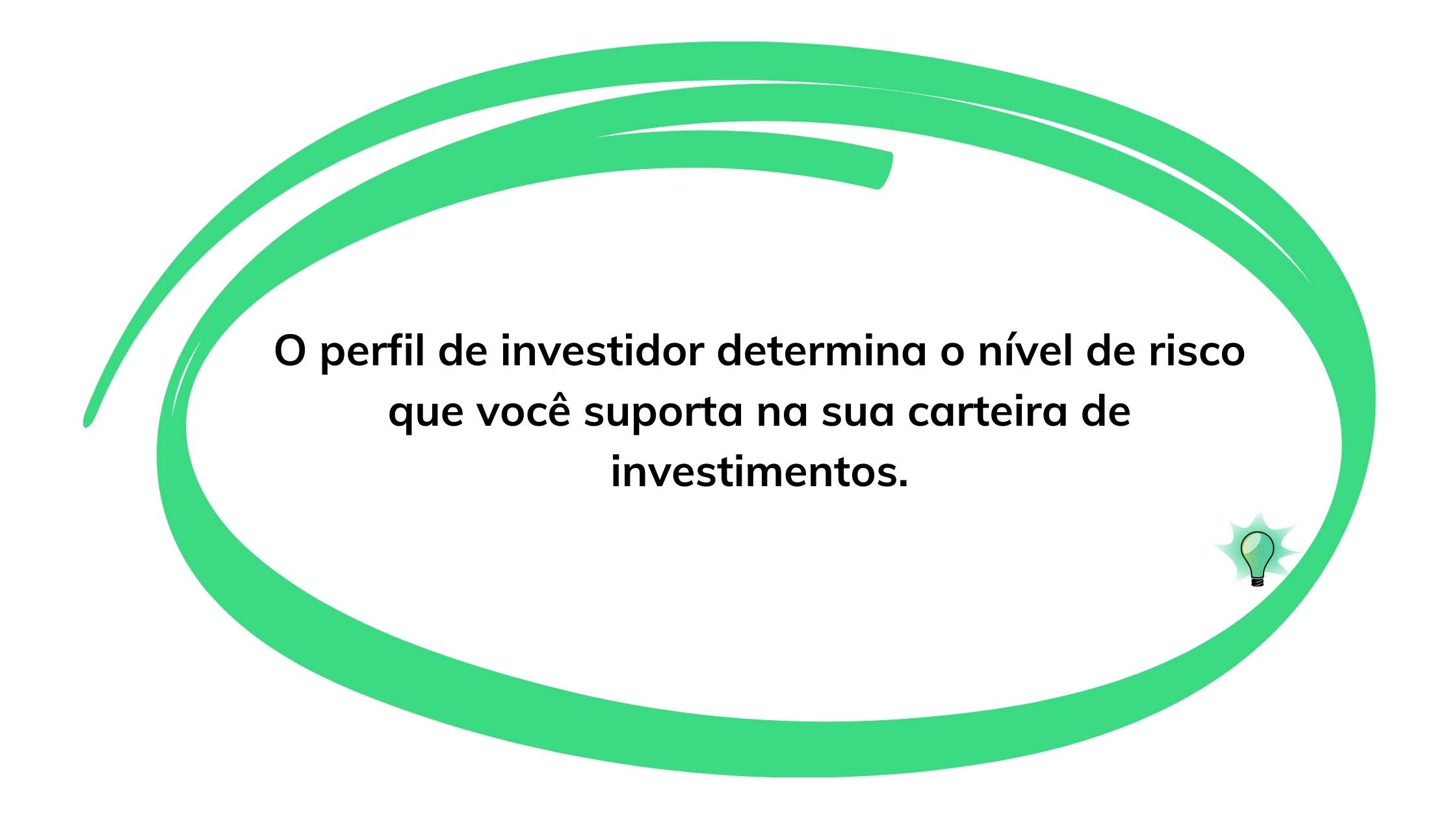
Understanding your investor profile is essential if you want to start investing.
It helps you analyze the risks you are willing to take and your investment preferences.
Someone who is not willing to deal with sharp fluctuations, for example, should be more cautious when investing in risky investments.
Open your account with a broker
To start investing, you'll need to open an account with a brokerage house.
As these companies specialize in investments, they usually offer a wide range of fixed-income securities, variable-income securities and investment funds.
Conclusion
These are the main types of investments on the market.
The habit of saving and investing will enable you to maintain your assets and financial security now and in the future.
So take a test to find out your investor profile and analyze your objectives so that you can choose the most suitable investments for your portfolio!