
Discover the best techniques to become a saver and organize your financial life
Announcements
Do you want to find the best techniques to become a saver and achieve your financial goals more easily?
Many people want to save more. However, this process is not so simple, since in order to save, it is necessary to organize your finances, make a plan, reduce expenses and much more.
To help you, we have prepared exclusive content with several tips for you to become a saver and achieve the financial freedom you dream of!
Read on to find out more.

What does saving money mean?
It is common to confuse the concept of saving with that of saving.
So, let's explain the differences between the two.
Saving money means not spending money unnecessarily. In other words, it is the habit of avoiding unnecessary purchases and buying only what you need.
You save money when you stop buying a product or exchange a more expensive item for a cheaper one, for example.
Saving is the act of keeping part of the money you earn.
When you save, you are actually setting aside a portion of your money to save and not use it for anything.
In short, when you save, you stop spending unnecessarily. When you save, you are saving the money that you have saved.
In any case, the two concepts are related and one thing complements the other!
The best techniques to become a saver
Saving is one of the main pillars of education and financial intelligence.
In other words, it is a way to acquire more peace of mind and security, since you will stop spending money, so that you can create financial wealth in the medium and long term.
If you are spending more than you should and are having trouble saving, check out the tips we have prepared for you to organize your finances:
1. Write down all your expenses
Writing down all your expenses is essential to controlling your budget.
If you don't understand your financial reality, it becomes much more difficult to save and make good choices.
So, if you really want to become a saver, make it a habit to write down all your expenses.
It can be in a financial notebook or an Excel spreadsheet, for example.
All your expenses should be written down, regardless of the amount, because even small expenses, when accumulated, turn into a snowball.
2. Classify your expenses into fixed and variable
Fixed expenses are those whose value is fixed or varies very little.
Furthermore, they occur practically every month, regardless of consumption level.
Examples of fixed expenses: rent, condominium, health insurance, college, child care, etc.
Variable expenses vary according to the intensity and frequency of consumption.
Examples of variable expenses: food, electricity, gasoline, leisure, personal care, etc.
To create a truly effective and objective financial plan, it is important that you classify your expenses into fixed and variable.
We also recommend dividing them into categories. This way, you can analyze which expenses can be reduced.

3. Define your financial goals
Saving, as you already know, is one of the pillars of financial education.
But if you don't have defined goals, you will have difficulty maintaining focus, motivation and financial control.
That's because by setting goals, you increase your focus, discipline and motivation.
Therefore, it is very important that you set financial goals that you really want to achieve.
Examples of financial dreams:
• Traveling abroad
• Buy a car
• Be able to organize yourself financially
• Buying a house
• Pay all debts
• Acquire financial freedom
• Have money to get married
4. Beware of promotions and compulsive purchases
Impulse purchases can be considered a major budget drain.
Therefore, if you want to become a saver, there is no other way: you need to avoid the compulsive shopping.
One of the main mistakes people make at these times is buying a product just because it was on sale.
You shouldn't buy an item just because it's cheap. By doing so, you run the risk of buying something unnecessary that you may never use.
One tip is to always have your shopping budget at hand so that you only buy what is already on your list. This way, it will be easier to resist temptation.
Tips to avoid compulsive shopping:
• Make lists
• Set a budget for what you want to buy
• Don’t shop when you’re sad or angry.
5. Free leisure
Take the opportunity to visit free places and events in your city.
This way, in addition to having fun and spending quality time with the person you love, you can also save money.
Squares, museums, bike rides and outdoor walks are some of the free leisure options!
6. Make a habit of researching prices
With the internet, it is much easier to research prices.
However, when doing research, don't just look at the price, but also the cost-benefit of the product.
In other words, be careful with what’s cheap that ends up being expensive.
To do this research, use specific tools, such as Buscapé, for example!
7. Know how to say no
The habit of saying 'no' brings benefits not only to your personal and professional life, but also to your financial life.
This means cutting back on impulse spending and learning to say no to yourself.
However, it is also important that you know how to say no whenever someone invites you to an event whose budget you cannot understand.
You should never give up your social life. However, be careful with events that are outside your financial means.
8. Invest your money
In addition to saving, it is important start investing.
This way, you maximize your resources and maintain your purchasing power in the medium and long term.
Conclusion
Now you know the best techniques to become a saver.
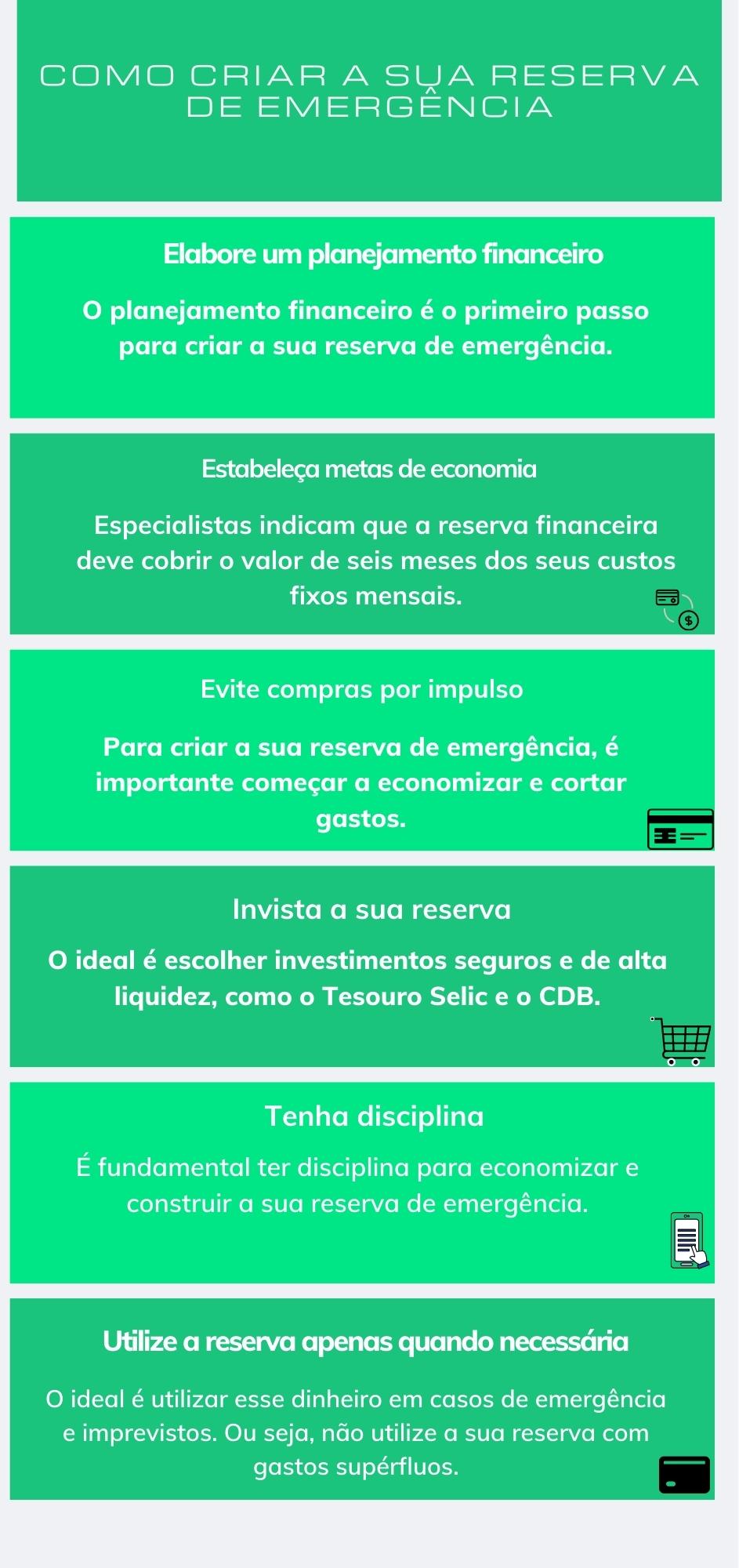
Saving money is important so that you have more peace of mind when an unexpected event arises, so that you can create your emergency fund and achieve your goals.